
 English
  русский
  عربى
عربى 
Why Does Womens Snowboard All Mountain Need Different Design
2026-07-28
Mountain riding changes from one slope to another, and sometimes the change happens within a single run. Snow can feel firm in one section, softer a few turns later, then uneven again once the surface has been used by several riders. A snowboard designed for that kind of setting needs to stay usable across different conditions instead of responding well in only one place.
A Womens Snowboard All Mountain is usually shaped with that idea in mind. Rather than focusing on one narrow riding style, the board has to remain workable across a wider range of mountain conditions. Some riders spend time on prepared slopes, while others move between mixed snow, changing turns, and terrain that does not stay uniform for long.
Design choices start from those real conditions. A board that feels comfortable on one surface may feel less natural once the snow changes. For that reason, all mountain design often tries to keep movement steady and predictable while still giving enough freedom for turning and balance.
A few points usually matter during design:
- how the board reacts when snow texture changes
- how easily the rider can guide direction
- how much effort is needed to stay balanced
- how smoothly the board moves between different surfaces
Riding conditions also affect how riders position their bodies. Weight shifts forward and back, then side to side, as the slope changes. The board needs to follow those movements without creating a feeling of resistance that takes away from the ride.
Which Structural Features Influence Board Performance
Board structure plays a large part in how a snowboard feels once it is on snow. Shape, flex, edge profile, and internal construction all work together, and each part changes the riding experience in a different way. One board may feel calm and steady, while another responds with a different level of movement under the same conditions.
Outline shape affects how the board moves when turning or changing direction. A shape that stays balanced can help the rider adjust more naturally when the slope shifts from smooth to uneven.
Flex matters just as much. A softer feeling board may bend more easily, while a firmer one holds its line with a different kind of response. Neither style suits every situation. The value comes from how well the flex matches the snow, the rider, and the pace of movement.
Internal structure also deserves attention. The materials inside the board influence weight, rebound, and how force transfers from the rider into the snow. Surface layers shape outside durability and affect the way the board handles daily riding and care.
Common structural points include:
- outline shape
- flex pattern
- edge profile
- internal core structure
- outer surface materials
Rather than treating each part as separate, snowboard design usually depends on how all of them work together. Small changes in one section can shift the riding feel in ways that become easy to notice on snow.
Why Rider Body Characteristics Affect Design Choices
Snowboards are not used by the board alone. Body position, stance, and balance all change the way a rider experiences the surface. Height and weight are part of that picture, although movement habits often matter just as much.
A rider leans, rotates, and shifts pressure continuously during a descent. That means a snowboard needs to fit natural movement rather than force the body into an awkward pattern. When the board matches the rider’s posture, turning and balance often feel more manageable.
Several rider-related points influence design:
- how weight moves between both feet
- how the rider stands during turns
- how much lower-body movement feels natural
- how the board behaves during longer sessions
- how comfortable control feels across changing terrain
Longer riding sessions add another layer. As fatigue builds, balance and stance can change little by little. A board that responds in a predictable way can make those changes easier to handle.
Different riders also carry different habits into the mountain. Some prefer smoother turns, while others move with a more active style. All mountain design takes those variations into account, which is part of why Womens Snowboard All Mountain boards are shaped differently from boards built for a single riding condition.
How Terrain Variety Changes Equipment Requirements
Terrain is never the same for long. A run may begin on a prepared slope, change into softer snow, then pass over uneven sections before the bottom of the trail. A snowboard has to keep working across all of that movement without becoming hard to manage.
A Professional Ski Equipment setup often needs to reflect that reality. Snowboards, boots, bindings, and other gear all work together, so board design cannot be isolated from the rest of the riding system.
Different terrain types create different needs:
| Terrain Condition | Design Consideration | Practical Effect |
|---|---|---|
| Groomed slope | Steady edge response | Smooth turning |
| Softer snow | Balanced board contact | Stable movement |
| Uneven surface | Flexible response | Easier correction |
| Mixed terrain | Versatile handling | Better adaptation |
| Longer descent | Predictable feel | Less disruption during riding |
Prepared runs often ask for cleaner edge response. Softer snow needs a board that keeps a stable feel without sinking into movement that feels too loose. Uneven ground brings another requirement, since the board should stay manageable when the surface changes quickly underfoot.
That range of conditions explains why all mountain design cannot rely on one simple shape or one fixed level of flex. A board needs enough range to remain useful across changing snow while still giving the rider a clear sense of control.
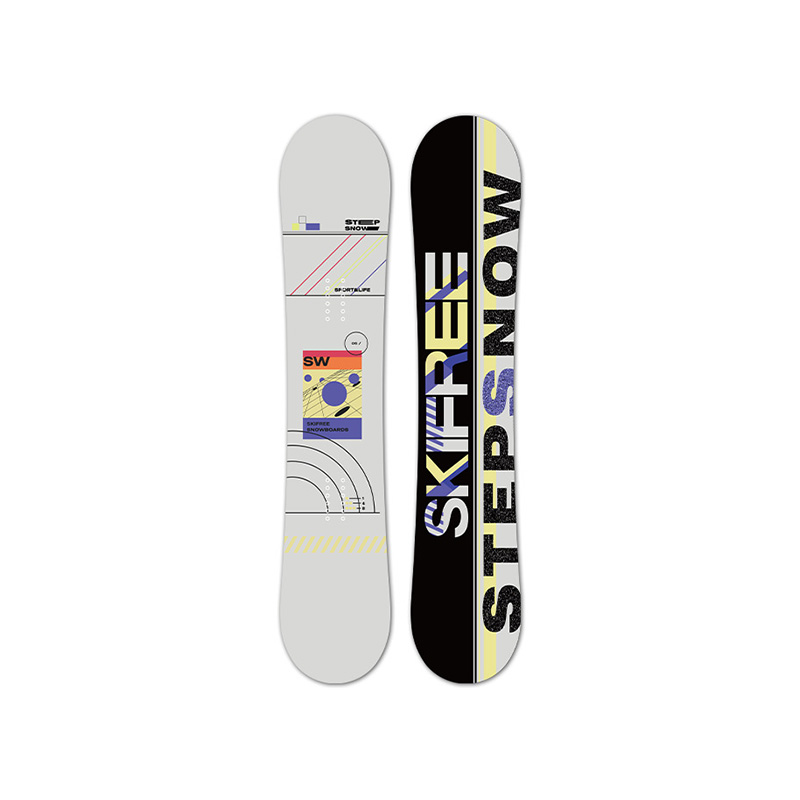
Why Flex And Stability Need Careful Balance
Flex and stability often influence each other. A board that bends more easily can create a different turning feeling from one that stays firmer during movement. Neither approach automatically fits every rider because snow conditions, riding habits, and terrain all continue changing.
Turning begins long before the board reaches the middle of a curve. Pressure builds gradually, weight shifts from one edge to another, and the board reacts through its entire length. Flex influences how naturally that process develops.
Stability becomes noticeable when riding speed changes or when the snow surface becomes less uniform. Small bumps, shallow grooves, or compact snow may all affect how the board moves beneath the rider.
Several practical observations often appear during riding:
- gradual edge transitions feel different from sudden direction changes
- softer sections may encourage smoother movement
- uneven snow asks for steady balance
- continuous turns depend on predictable response
Design often tries to keep those characteristics working together instead of improving only one. A board that reacts consistently allows riders to spend more attention on terrain rather than constantly adapting to unexpected movement.
How Material Selection Supports Daily Riding
Materials influence far more than appearance. Internal construction, outer layers, edges, and the riding surface all contribute to how a snowboard behaves through repeated use.
The internal core provides the foundation. Different construction methods influence weight distribution and the way movement travels through the board while turning or changing direction.
Outer layers protect the structure while helping the board keep its shape during ordinary riding. Edge materials remain in regular contact with snow, making their condition important throughout the season.
Material selection usually considers several practical points:
- overall board weight
- surface resistance during ordinary use
- edge durability
- routine maintenance requirements
- balance between different structural parts
Daily riding gradually exposes equipment to changing temperatures, moisture, and repeated contact with snow. Material choices therefore influence both riding feel and maintenance routines.
Regular cleaning and suitable storage also support the condition of the board. Drying equipment after riding and removing remaining snow allows riders to inspect edges and surfaces more easily before the next outing.
What Should Riders Compare Before Choosing Equipment
Selecting a snowboard becomes easier when attention stays on practical riding needs rather than appearance alone. Comparing several characteristics together often provides a clearer picture than focusing on one specification.
Useful comparison points include:
| Comparison Item | Why It Matters | Practical Consideration |
|---|---|---|
| Board Shape | Influences handling | Match riding preference |
| Flex Level | Changes response | Consider regular terrain |
| Weight | Affects movement | Compare riding comfort |
| Surface Material | Influences maintenance | Review everyday care |
| Riding Environment | Supports selection | Match common snow conditions |
Many riders also compare where they spend time on the mountain. Someone who regularly moves between different snow conditions may look for balanced handling, while another rider may spend nearly every session on prepared slopes.
Trying to compare equipment in relation to personal riding habits often produces more useful decisions than following general suggestions alone.
How Does Professional Ski Equipment Support Complete Riding Systems
A snowboard works together with several other pieces of equipment. Looking at only one component provides only part of the picture because every item contributes to the overall riding experience.
A Professional Ski Equipment setup commonly includes:
- snowboard
- boots
- bindings
- protective equipment
- clothing suitable for mountain conditions
Boots influence how movement transfers into the board. Bindings connect rider and snowboard, allowing body movement to become board movement. Protective equipment supports riding preparation, while clothing affects comfort throughout changing weather.
Compatibility between different items often receives attention during equipment selection. When components work comfortably together, movement usually feels more natural during longer riding sessions.
Rather than viewing each product independently, riders often consider how the complete setup supports their typical mountain environment.
Why Regular Care Influences Long Term Riding Experience
Routine care becomes part of normal equipment use. Simple inspection after riding helps riders notice small changes before returning to the mountain again.
Several everyday habits are commonly followed:
- brush away remaining snow
- allow the board to dry naturally
- inspect edges for visible damage
- check bindings before the next session
- store equipment in a dry place
Visual inspection requires only a short amount of time. Looking over the surface, edges, and binding areas allows riders to identify anything unusual before another ride begins.
Storage conditions also deserve attention. A clean, dry environment helps reduce unnecessary exposure to moisture during periods when the board is not in use.
Maintenance is not only about preserving appearance. Keeping equipment clean also makes later inspection easier because dirt or remaining snow does not hide small changes on the surface.
How Can Better Design Match Different Riding Expectations
Every rider approaches the mountain with different habits, preferred terrain, and personal movement patterns. Equipment design reflects that variety rather than assuming one structure fits every situation.
A Womens Snowboard All Mountain brings together board shape, flex, material selection, and riding balance so the board can respond across changing mountain conditions. Design decisions begin with practical riding situations instead of appearance alone.
Terrain, rider posture, equipment compatibility, and routine care all influence how the snowboard feels after leaving the shop. Looking at those factors together usually provides a more complete understanding than comparing only one specification.
A Professional Ski Equipment system also benefits from that broader view. Snowboard, boots, bindings, and protective gear all contribute to everyday riding, making compatibility an important part of equipment selection.
Careful comparison before purchase, followed by regular inspection after riding, allows equipment to remain suitable for changing mountain conditions while continuing to match the rider's own expectations throughout the season.








- Building 1 and 2, No. 2269, Jingzhong Road, Hongjia Street, Taizhou, Zhejiang, China
- +86-18857621312
- [email protected]
