
 English
  русский
  عربى
عربى 
Why Are Electric Farm ATVs Becoming Popular in Agriculture
2026-10-09
Agricultural work often involves moving between fields, checking equipment, transporting tools, and caring for livestock. These tasks may not require a large tractor, yet walking across a wide property can take time and effort. All-terrain vehicles have become useful for handling these daily activities, and electric models are giving farmers another option considering.
An Electric Farm ATV uses an electric motor providing movement instead of relying on a conventional fuel-powered engine. This changes how the vehicle operates, from the sound it produces to the way it gets charged and maintained. For farms, orchards, ranches, and greenhouse operations, the appeal lies in finding a vehicle that fits routine work without adding unnecessary complexity.
The shift toward electric agricultural vehicles also reflects wider changes in farm management. Businesses are paying closer attention to energy use, operating costs, worker comfort, and the environmental effects of daily operations. Electric ATVs are becoming part of this discussion as manufacturers expand their options for agricultural transportation.
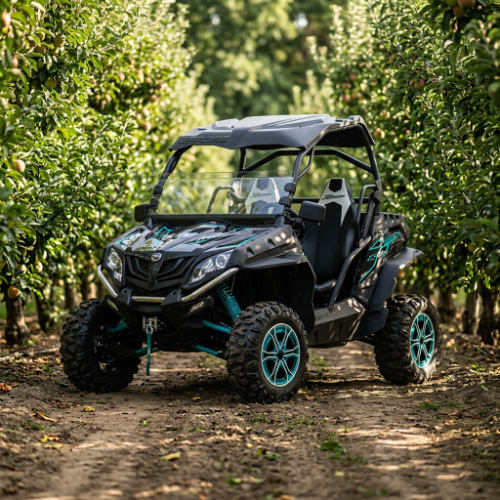
Why Are Farms Considering Electric ATVs for Daily Work?
Farm work involves many short journeys throughout the day. A worker may travel from a storage building to a field, return collecting equipment, and then head toward a livestock area. These repeated trips can make a compact utility vehicle useful, particularly when the terrain stays too rough for an ordinary passenger vehicle.
Electric ATVs can support this type of movement by providing a compact platform for farm transportation. Depending on the model, they may carry tools, supplies, feed, or other items needed for routine tasks. Their usefulness depends on the vehicle's carrying capacity, ground clearance, battery capability, and suitability for the property.
Several everyday tasks may benefit from an electric ATV, including checking fences and gates across a farm, carrying tools between storage areas and work sites, moving supplies around orchards and plantations, inspecting livestock areas and ranch facilities, traveling between greenhouse buildings, and supporting routine property maintenance.
The key consideration is how often these trips occur and what each trip requires. A farm with frequent short-distance journeys may find electric transportation practical, while operations involving long travel distances or heavy towing need assessing the vehicle genuinely more carefully.
How Does Electric Power Change the Farm Driving Experience?
An electric motor delivers movement without the combustion process used by a fuel-powered engine. This gives an electric ATV a genuinely different operating feel, especially during short trips, low-speed travel, and repeated stops around working areas. The actual driving experience depends on the motor, vehicle design, terrain, and load.
Electric power can also make speed control feel genuinely more direct. This may prove useful when a worker needs moving slowly around livestock, navigating between crop rows, or positioning the vehicle beside a storage area. Operators still need learning the controls and following safe driving practices, particularly when traveling over uneven ground.
Another difference is the way the vehicle gets prepared for use. A fuel-powered ATV needs suitable fuel, while an electric model needs sufficient battery charge for the planned work. Farms can incorporate charging into their daily routines, but the arrangement should reflect how the vehicle gets used and how long it needs remaining available.
Can Quieter Operation Benefit Agricultural Work?
Noise is an everyday consideration on working farms. Engines may operate near animal housing, greenhouses, residential areas, or buildings where people carry out other tasks. An electric ATV generally produces less operating noise than a comparable combustion-powered vehicle, although tires, mechanical components, and the surrounding terrain can still create sound.
This quieter operation may prove useful in areas where repeated vehicle movement is part of the daily routine. Workers can travel between buildings without adding as much engine noise to the surroundings. On ranches, lower vehicle noise may also be preferable when approaching livestock, although animals can react to movement, unfamiliar equipment, and other sounds as well.
Noise reduction shouldn't get treated as a replacement for safe operation. Workers still need making their presence known when approaching people or animals, especially because a quiet vehicle may be genuinely less noticeable. Clear routes, suitable warning devices, and operator awareness remain important parts of farm transportation.
How Can Electric Farm ATVs Support Lower-Emission Operations?
Agriculture depends on energy for transportation, machinery, irrigation, storage, and many other activities. Farms looking reviewing their environmental impact may consider how their vehicles get powered as part of a wider operational plan. Electric ATVs offer one way reducing direct exhaust emissions during vehicle operation.
Unlike fuel-powered models, battery-electric vehicles don't produce tailpipe exhaust while moving. However, their overall environmental impact also depends on how electricity gets generated, how batteries get produced, and how the vehicle gets maintained and eventually handled at the end of its service life.
Charging from a lower-carbon electricity supply can strengthen the environmental case for electric transportation. Farms with suitable renewable energy systems may also explore how vehicle charging fits into their existing energy use. These arrangements depend on the property's electrical infrastructure and the farm's working schedule.
For agricultural businesses, electrification is often a gradual process, rather than a complete replacement of every fuel-powered machine. An electric ATV may suit routine transportation while larger machinery continues handling tasks that require different power, capacity, or operating endurance.
What Makes Maintenance Different for Electric Farm ATVs?
Maintenance can affect how much time a vehicle spends available for work. Fuel-powered ATVs require attention to engine-related components and other systems associated with combustion. Electric models remove several of these engine-related service needs, although they still require regular inspection and care.
An electric vehicle may have fewer routine tasks associated with engine oil and combustion components. This can simplify parts of the maintenance process, but it doesn't mean the vehicle stays maintenance-free. Tires, brakes, suspension, steering, bearings, electrical connections, and other components still need attention.
Farm environments can place additional demands on a vehicle. Mud, dust, moisture, plant debris, and rough surfaces may affect different parts of the machine, so cleaning and inspection should follow the manufacturer's instructions. Battery condition, charging equipment, connectors, and protective covers also need checking according to the vehicle's service requirements.
| Inspection Area | Why It Matters |
|---|---|
| Tires and wheels | Help maintain traction on changing surfaces |
| Brakes and steering | Support controlled movement |
| Battery and connections | Help identify charging or electrical concerns |
| Suspension and chassis | Reveal wear from uneven terrain |
| Lights and warning devices | Support visibility around working areas |
| Cargo attachments | Help keep tools and supplies secure |
For farm managers, the useful comparison isn't simply the number of components in each vehicle. It's how the vehicle's inspection schedule, service access, replacement parts, and support arrangements fit the workday.
How Do Lithium-Ion Batteries Fit Agricultural Transportation?
Lithium-ion batteries get used in many modern electric vehicles because they can store energy in a relatively compact package. In a farm ATV, the battery supplies the energy needed by the motor and associated electrical systems. The available working time depends on battery capacity, terrain, vehicle load, driving style, temperature, and other operating conditions.
A vehicle used for occasional inspections may have genuinely different energy needs from one that carries supplies throughout a working day. Frequent uphill travel, soft ground, heavy loads, and repeated acceleration can increase energy use. Buyers should therefore consider the actual work pattern, rather than relying on a general statement about battery range.
Charging arrangements also matter. A farm may charge the ATV overnight or during periods when it's not in use, while a busy operation may need a genuinely more deliberate charging schedule. The location of the charging point, access to electrical power, charging time, and weather protection should all get considered.
Battery care is another part of ownership. Operators should use compatible charging equipment and follow the manufacturer's guidance on charging, storage, temperature, and inspection. These practices can help manage battery condition and reduce avoidable problems during daily use.
Can Four-Wheel Drive and High-Torque Motors Help on Farm Terrain?
Farm surfaces are rarely uniform. A vehicle may travel across compacted tracks, loose soil, wet grass, gravel, or sloping ground within the same property. The ability moving safely across these surfaces depends on several design features, including tire selection, weight distribution, ground clearance, suspension, motor output, and the drive system.
A four-wheel-drive system can help distribute driving force across the wheels when conditions require additional traction. This may prove useful on uneven tracks or surfaces where grip changes along the route. However, four-wheel drive doesn't remove the risk of slipping, getting stuck, or losing control, and its usefulness depends on the vehicle's design and operating conditions.
High-torque electric motors can provide strong pulling force at low speeds, which may suit controlled movement around a farm. This can help when the vehicle needs starting moving with a load or traveling slowly across suitable terrain. Actual performance varies by model, and buyers should check how the motor and drive system get intended for use.
The vehicle also needs matching the work being performed. An ATV designed for light inspections may not suit demanding hauling or steep terrain. Farmers should compare the intended workload with the manufacturer's guidance on load limits, towing use, surface conditions, and safe operation.
How Does Range Affect Farm Inspections and Ranch Transportation?
Range influences how confidently a worker can plan a day of travel. On a small property, the ATV may make short journeys between nearby buildings and fields. On a large ranch or plantation, repeated inspections can involve longer routes, changes in elevation, and limited opportunities returning to a charging point.
The stated range of a vehicle may not reflect every working condition. Carrying cargo, traveling over soft ground, climbing slopes, using electrical accessories, and driving in cold or hot weather can affect energy consumption. Buyers should consider a realistic working pattern and allow for a suitable reserve, rather than planning every trip around a published range figure.
For ranch transportation, route planning can make electric use genuinely more practical. Charging may get scheduled during breaks or at a central facility, depending on the workday. If the vehicle needs remaining in use for extended periods, businesses may need assessing whether another vehicle, a different charging arrangement, or a fuel-powered option is genuinely more suitable.
Range is therefore a matter of matching the vehicle to the property. The relevant question is whether the ATV can complete its intended tasks within the farm's normal operating routine.
What Role Can Electric ATVs Play in Orchards and Greenhouses?
Orchards and greenhouses have particular transportation needs. Workers may need carrying pruning tools, containers, small equipment, or supplies between growing areas. Narrow paths and limited turning space can also make vehicle size an important consideration.
An electric ATV may prove useful when its dimensions and turning behavior suit the available routes. Quieter operation can be welcome around work areas where people are checking plants or handling delicate tasks. In greenhouses, however, the vehicle must suit the indoor environment, including floor conditions, ventilation needs, turning clearance, and any restrictions on vehicle use.
The ground surface deserves careful attention. Soft soil, irrigation water, plant debris, and narrow paths can affect traction and maneuverability. The vehicle should get operated only where its design and the site conditions allow safe movement without damaging crops or infrastructure.
For these applications, a compact design may matter as much as the power source. Farmers should review access routes, turning areas, cargo requirements, and storage arrangements before selecting a vehicle for orchard or greenhouse work.
How Can Electric Farm ATVs Fit Into Intelligent Farm Management?
Modern farm management increasingly involves coordinating people, equipment, supplies, and field activities. An ATV can support this process by helping workers travel between work areas and carry the items required for inspections or maintenance. Its role becomes genuinely clearer when transportation gets planned alongside the farm's wider workflow.
Some vehicle models may offer digital displays, battery-status information, or other electronic features. Depending on the design, these features can help operators understand the vehicle's condition and plan charging. More advanced connectivity or fleet-management functions may be available on selected models, but buyers should confirm which capabilities are actually included.
A farm doesn't need a complex digital system benefiting from better vehicle planning. Even a simple record of charging, inspection routes, maintenance needs, and vehicle use can help managers understand whether an electric ATV fits the work pattern. Larger operations may also consider how vehicle records connect with existing equipment-management practices.
The purpose of intelligent management is supporting clear decisions. Technology proves useful when it helps workers plan tasks, maintain equipment, or understand operating needs without adding unnecessary steps.
What Should B2B Buyers Consider When Sourcing Electric Farm ATVs?
B2B procurement involves genuinely more than comparing the purchase price of two vehicles. Agricultural buyers need understanding how a vehicle will get used, what support stays available, and whether the supplier can provide information that matches the intended application. These considerations become especially important when sourcing vehicles for multiple sites or a commercial fleet.
| Area to Assess | What to Confirm |
|---|---|
| Application fit | Whether the vehicle suits inspections, cargo movement, ranch work, or another defined task |
| Battery and charging | Charging requirements, battery-care instructions, and expected use under planned conditions |
| Terrain capability | Suitability for the property's slopes, surfaces, and access routes |
| Load and towing needs | Manufacturer's stated limits and whether the intended work is supported |
| Maintenance support | Service procedures, spare parts, warranty terms, and technical assistance |
| Safety and compliance | Applicable vehicle rules, operator requirements, and relevant market regulations |
| Delivery and documentation | Packaging, shipping arrangements, manuals, and product information |
A supplier should explain the vehicle's intended use and provide clear documentation. Buyers should avoid relying on broad claims about range, maintenance savings, or terrain performance without considering the conditions under which those claims apply.
How Can OEM Customization Meet Different Agricultural Needs?
Agricultural businesses don't all operate in the same way. A livestock farm may need cargo space for feed and tools, while an orchard may place greater emphasis on compact dimensions and maneuverability. OEM customization can help buyers discuss design options that match these differences, subject to the manufacturer's capabilities.
Potential customization areas may include cargo racks, storage arrangements, color, control layout, protective accessories, and product branding. Battery configuration, drive systems, and other functional changes require careful engineering review because they can affect vehicle performance, safety, and compliance. Not every request will suit every model.
Manufacturers and buyers should establish the intended application before discussing changes. Clear requirements make it genuinely easier assessing whether a proposed feature will help with actual farm tasks or add complexity without practical value. Documentation should also reflect the final product configuration, so operators understand its use and care requirements.
For distributors and cross-border sellers, customization may also influence product positioning. A clear range of configurations can help serve different agricultural segments, provided product descriptions accurately explain each vehicle's intended function and available features.
How Is Agricultural Electrification Changing Vehicle Selection?
Agricultural electrification isn't limited to tractors or large machinery. Smaller utility vehicles are also part of the discussion because they handle frequent movement around farms and may get used for short, repeated journeys. These applications can provide a practical starting point for businesses that want assessing electric transportation without changing every part of their equipment fleet.
The decision still depends on the work. Electric models may suit farms that can plan charging, operate within a manageable travel area, and benefit from quieter movement or reduced routine engine servicing. Fuel-powered vehicles may remain appropriate where long operating periods, limited charging access, or particular performance needs make battery-electric use genuinely less practical.
Manufacturers, distributors, and farm managers can evaluate these choices by looking at daily routes, load requirements, terrain, charging access, maintenance support, and local operating rules. This application-based approach keeps the decision tied to the real needs of agricultural work, rather than treating electrification as a single solution for every farm.








- Building 1 and 2, No. 2269, Jingzhong Road, Hongjia Street, Taizhou, Zhejiang, China
- +86-18857621312
- [email protected]
