
 English
  русский
  عربى
عربى 
Can Tip Rocker Skis Handle Groomed Runs and Soft Snow
2026-10-13
Every turn starts a little differently depending on what's underfoot. A firm groomed run asks a skier to guide the ski deliberately into an arc, while loose or chopped-up snow turns that same motion into something far less predictable. The moment a tip catches unexpectedly or pushes back against a direction change, the rhythm of the turn breaks and the skier's confidence takes a hit right along with it.
Tip rocker skis tackle a piece of this problem through their upturned front end. Lifting that section away from the snow lets the ski release more naturally once the skier commits to turning, which cuts down on the tip snagging as conditions shift beneath the boots. Beginner and intermediate skiers, weekend resort visitors, and anyone drawn to light all-mountain terrain tend to notice this difference most, since turn initiation ends up feeling genuinely more forgiving under their feet.
This isn't purely about how a ski looks sitting in a rack, either. Tip shape decides how the ski actually meets the snow, how it answers steering input, and how smoothly a skier links one turn into the next. Getting a handle on these mechanics helps buyers land on skis that fit their ability, their favorite terrain, and the way they actually ski on a typical day out.
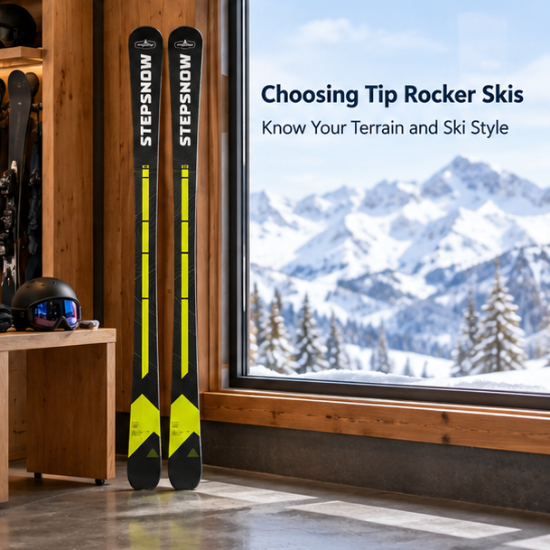
What Are Tip Rocker Skis?
Tip rocker describes the upward sweep built into a ski's front end. Instead of lying flat against the snow once unweighted, the tip lifts clear of the surface, and how much it lifts — along with the exact curve — shifts from one design to another, which is why two skis can handle so differently despite looking similar.
Older, more traditional shapes kept the front section pressed closer to the snow when the ski sat flat. Rocker breaks that pattern on purpose, pulling the front away so it's less prone to digging in abruptly the instant the ski starts changing direction.
A handful of related features shape how all this comes together on snow.
| Ski Feature | Role in Handling |
|---|---|
| Upturned tip | Helps the front of the ski release into a turn |
| Camber underfoot | Supports edge engagement and pressure distribution |
| Ski waist | Influences how the ski feels during edge changes |
| Flex pattern | Affects how the ski bends under the skier |
| Overall shape | Helps determine how the ski responds across different terrain |
None of these features does its job in isolation. Tip rocker smooths out turn entry on its own merits, true, but the ski's broader shape, stiffness, and edge geometry still decide how it carries through the rest of the turn.
How Does Tip Rocker Make Turn Initiation Easier?
A turn begins the second a skier shifts weight and pressure, pointing the skis toward a new line. The front of the ski does a lot of the early work here, since it's what carves out the path the rest of the turn will follow.
A raised tip meets the snow with less of a jolt during that opening moment. That lets the ski start swinging into a new direction without the front gripping or snagging suddenly, which matters most on surfaces that are uneven or sitting under a layer of loose snow.
For someone newer to the sport, that softer response takes a real demand off the plate. Rather than bracing against a tip that fights back, the skier gets to put attention toward balance, looking downhill, and steering with intention instead.
None of this turns the ski on its own, though, and it doesn't substitute for solid fundamentals. Balance and pressure still fall on the skier — the shape just gives a bit more room for error while those movements are still finding their rhythm.
Why Does a Raised Tip Help Reduce Edge Catching?
An edge catch happens when the ski bites into the snow at the wrong moment, throwing off balance and breaking the flow of a turn — a familiar annoyance for anyone changing direction on bumpy terrain or crossing snow that varies in texture from one patch to the next.
A rockered tip changes the whole contact story up front. Because the tip curves upward, it's far less likely to press into the snow the way a flatter front end would while the ski is still relatively unweighted, which trims the odds of a sudden catch right as the turn begins.
This shows up most clearly where snow conditions keep changing across a run. Loose piles kicked up by other skiers, patchy soft spots, and uneven ground all test how a ski responds, and a more forgiving tip helps carry the skier through these stretches with fewer hiccups along the way.
Rocker still won't wipe out every kind of edge catch, though. Edge control, how the skis are aligned, speed, the snow itself, and the skier's own movements all keep mattering just as much. It's better thought of as a feature that eases certain transitions rather than something that replaces technique outright.
How Can Tip Rocker Improve Confidence for Beginner and Intermediate Skiers?
Learning to turn asks for genuinely more than swinging the skis side to side. A skier is juggling body position, balance, pressure, and direction simultaneously, all while reading terrain that keeps changing underneath them, and when the skis react more sharply than expected, that whole learning curve starts feeling tense fast.
Tip rocker skis soften that entry point considerably. Their raised tips cut down on sudden engagement up front, which frees newer skiers to focus on steering instead of flinching at an unexpected catch mid-turn.
Intermediate skiers get something out of this too. The moment they start pushing into steeper runs, mixed snow, or sharper turns, they run into demands that go well past what familiar groomed slopes ever asked of them, and a forgiving tip eases that jump without forcing a complete overhaul of technique all at once.
Confidence still comes down to picking gear that fits ability and terrain, though. A ski that's too stiff, too long, or simply mismatched stays hard to manage even with a rockered tip helping out. The whole design needs backing up the skier's actual needs rather than resting on one feature to carry the load alone.
Do Tip Rocker Skis Still Provide Grip on Hard Snow?
Grip carries real weight on firm groomed terrain. The ski has to bite its edge properly so the skier can shape the turn and stay in control as pressure shifts through the motion.
Rocker on its own doesn't spell weak grip. Edge hold comes down to a handful of design choices working together — the ski's shape, how much of the edge actually touches the snow, the stiffness built into the ski, and how the skier applies pressure through the arc. A ski with a rockered tip holds plenty of grip once the rest of its construction is built for firm-snow skiing.
What matters is the balance a ski strikes between an easy entry and solid edge hold through the remainder of the turn. A design that feels gentle at the start should still deliver the support a skier needs once that ski is tipped fully onto its edge.
For buyers who log most of their time on groomed resort terrain, it pays to weigh tip rocker against the ski's actual intended use. A model built for relaxed recreational cruising won't respond the same way as one shaped for more forceful carving, even if both carry the same upturned front end.
How Does Tip Rocker Perform in Changing Snow Conditions?
Snow rarely stays consistent across a whole mountain in a single day. A groomed trail might soften up near its edges, pick up loose snow around high-traffic zones, or wear uneven in spots where skiers have carved through repeatedly — and all of that changes how the front of a ski meets the ground.
A raised tip helps the ski glide over loose or irregular snow rather than driving straight into it, which keeps direction changes feeling smoother and lets the skier hold onto a steadier rhythm run after run.
That advantage carries over into light all-mountain skiing too. Anyone bouncing between groomed trails and the occasional soft or uneven patch tends to appreciate a design with some give built into how it handles that variety.
Rocker still doesn't turn every ski into an all-terrain tool, though. Deep powder, hard ice, steep pitches, and serious off-piste conditions each place their own demands on shape and build. Buyers should weigh the terrain they'll actually ski and their own experience level before assuming a rockered tip signals broad versatility across the board.
What Should Buyers Consider When Choosing Men's Alpine Skis?
Men's alpine skis get built around different styles, ability levels, and terrain preferences from one model to the next. Some aim for predictable handling suited to casual resort days, while others get shaped around sharper edge control or wider all-mountain range.
Tip rocker is only one piece of that puzzle. Buyers also need weighing ski length, waist width, flex, build quality, and the kind of snow they typically ski — each of these shapes how the ski starts a turn, answers pressure, and feels across a long day on the hill.
A practical side-by-side helps narrow the field.
| Buying Consideration | What to Think About |
|---|---|
| Ability level | How comfortably can the skier control turns? |
| Ski length | Does the length suit the skier's build, skill, and intended use? |
| Waist width | Is the ski suited to groomed runs, mixed terrain, or softer snow? |
| Flex | Does the ski respond comfortably to the skier's strength and movements? |
| Tip rocker | Would easier turn entry and a forgiving tip suit the skier's habits? |
| Construction | Does the ski provide the intended balance of support and handling? |
No single line item should settle the whole purchase on its own. A ski needs feeling manageable across the entire turn, not just in that opening moment of changing direction.
How Does Ski Length Affect Turn Initiation?
Length shapes how a ski travels through a turn and how much room it needs to actually pivot. Shorter skis tend feeling easier to steer through tight turns, while longer ones bring a different kind of stability depending on how they're built and what they're built for.
Picking the right length comes down to the skier's height, weight, skill, favored speed, and terrain. A beginner leans toward easy handling above all else, while a seasoned skier often wants a ski that can back up stronger, more aggressive movements across open terrain.
Rocker shifts how that length feels once a skier's actually on snow. Since the upturned tip changes how the front contacts the surface, a rockered ski can feel easier releasing into a turn than a similarly sized ski with a flatter front — though that's no reason jumping to a longer or shorter length purely because rocker is on the spec sheet.
Length guidance works best when it accounts for the whole ski design alongside the individual skier. Anyone unsure here does well asking a qualified ski shop or rental professional rather than leaning on tip shape as the only clue.
How Does Waist Width Influence Handling?
The waist marks the narrowest stretch of a ski, sitting between the front and rear sections. Its width decides how the ski rolls from one edge to the other and how much surface area sits under the skier's boots at any given moment.
A narrower waist tends suiting skiers who stick mostly to groomed runs and want crisp, responsive edge changes. A wider waist brings more float through softer snow instead, though shape and build still play a hand in the final result either way.
Rocker and waist width speak to genuinely different parts of the skiing experience. Rocker shapes how the front releases into a turn, while the waist governs the relationship between ski and snow underfoot. Both deserve weighing together when picking gear for a specific kind of terrain.
For resort skiers who occasionally wander into light all-mountain territory, a balanced build often strikes a workable middle ground. The right call depends on where someone actually spends their ski days and whether sharp edge changes or softer-snow support matters more to them personally.
What Role Does Wood Core Construction Play?
A ski's core shapes how it flexes, how it answers pressure, and how it feels in motion. Wood shows up in plenty of ski cores because it strikes a solid balance between support and flex, though the final feel depends on the wood species, how it's built, and whatever materials wrap around it.
A well-matched core lets the ski respond predictably as pressure shifts through a turn. That matters because rocker mostly reshapes the front section alone, while the core governs how the whole ski carries load from tip to tail.
Pair a rockered tip with a flex pattern that actually fits, and turn entry stays comfortable without the rest of the ski feeling disconnected from that front curve. Core material by itself still won't decide how easy a ski turns, though — side shape, edge geometry, stiffness, and the skier's own technique all feed into that outcome together.
Buyers sizing up men's alpine skis do well reading the full construction picture rather than one spec in isolation. Rocker, core design, and flex all need lining up sensibly for the ability level and skiing environment someone's actually working with.
Are Tip Rocker Skis Suitable for Light All-Mountain Use?
Light all-mountain skiing usually means drifting between prepared trails and patches of snow that haven't been groomed quite as evenly. Skiers run into loose snow, small surface irregularities, or spots churned up by everyone else who's skied through already.
Rocker eases these transitions by helping the ski's front glide over irregular snow rather than plowing straight into it, cutting down on that dug-in feeling right as a skier starts turning off the beaten path.
For recreational skiers, that translates into a more relaxed way of exploring different corners of a resort. They keep the familiar feel of groomed terrain while carrying a design that bends a little more forgivingly once conditions turn choppy or inconsistent.
Light all-mountain use still isn't the same thing as true off-piste skiing, though. Harder terrain often calls for different width, stiffness, edge performance, and skill altogether. Buyers should match the ski to the conditions they'll genuinely ski rather than the conditions they imagine skiing someday.
How Can Ski Rental Businesses Select Tip Rocker Skis?
Rental shops see a huge mix of skill levels, body types, and personal preferences walk through the door every day. Some customers are still working out basic turns, while others just want dependable gear for a regular day on familiar runs. A rental fleet has to cover these different needs without turning the selection process into a headache for staff or customers.
Tip rocker skis make a solid option for recreational renters who want easy turn entry and forgiving handling above all else. The design tends to suit beginners and intermediate skiers hoping to feel steadier on groomed terrain and through minor shifts in snow texture.
Rental staff do best explaining what the feature actually does rather than pitching rocker as some guarantee of performance. Length, waist width, flex, and the terrain a customer plans to ski still matter plenty in the final recommendation.
A rental operation can also keep an ear out for feedback on how the skis actually handle in practice. Notes on turn entry, edge grip, comfort, and overall control help staff steer future renters toward models that genuinely fit what they're after.
What Should Ski Retailers Explain About Tip Rocker?
Retailers often need translating a design detail into something a customer can actually feel the benefit of. A shopper might spot the curved tip right away and still wonder whether it'll make any real difference once they're actually on the mountain.
A clear product description explains that rocker changes how the ski's front meets the snow — easing the tip into a turn and trimming the odds of a sudden catch on loose or uneven ground, while the rest of the ski keeps handling grip and stability on its own terms.
Retailers also do well spelling out where the feature stops helping. A raised tip doesn't erase the need for decent technique, and it won't promise even performance across every surface a skier might encounter. Honest, balanced descriptions give shoppers a real basis for comparing gear against their own habits on snow.
Good product copy touches on intended terrain, ability level, length guidance, waist width, core build, and general handling traits all in plain terms. Laid out that way, customers end up making far more informed choices without needing a technical ski background first.
How Can Cross-Border E-Commerce Describe Tip Rocker Skis Clearly?
Online shoppers compare skis sight-unseen more often than not, never getting a chance to hold the thing before buying. Product pages carry extra weight here, needing to translate design features into practical terms, especially for customers coming from different skiing backgrounds or shopping in a second language.
A solid description of tip rocker skis ties the raised front directly to turn initiation, edge release, and handling through shifting snow. The wording should stay specific enough answering real buyer questions while steering clear of any claim suggesting the design guarantees safety or performance across every single condition out there.
Useful information on a product page covers who the ski is built for and at what ability level, what terrain it's designed handling, how rocker actually shapes turn entry, what role waist width and length play, how core construction and flex work together, and some guidance helping shoppers choose between recreational and all-mountain builds.
Search-friendly copy should weave in terms like men's alpine skis and tip rocker skis naturally across headings and descriptions rather than forcing them in. Supporting content should answer genuine questions a buyer might actually have, not just repeat the same phrase section after section for its own sake.
Plain, clear language also cuts down on confusion between similar-looking models sitting side by side online. Once a description spells out what the design actually does, where it tends helping, and which other specs shape the overall feel, shoppers get a genuinely practical foundation for comparing their options before checking out.




- Building 1 and 2, No. 2269, Jingzhong Road, Hongjia Street, Taizhou, Zhejiang, China
- +86-18857621312
- [email protected]
