
 English
  русский
  عربى
عربى 
Where an Amphibious ATV Vehicle Excels Beyond a Standard UTV
2026-06-26
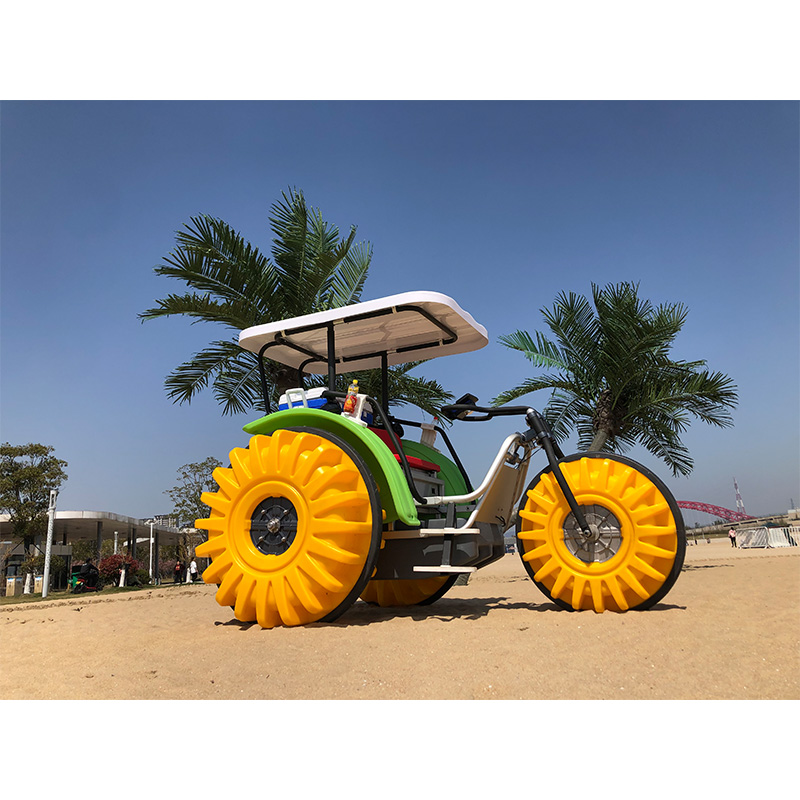
An Amphibious ATV Vehicle looks similar to a standard ATV at first glance. The wheels, the seating position, the handlebars or steering wheel—all familiar features. The difference reveals itself when the vehicle approaches water. Instead of stopping at the water's edge, the amphibious vehicle continues forward and floats.
The construction includes features that make water operation possible. The body seals against water entry. Flotation elements keep the vehicle on the surface. The tires or tracks provide propulsion in water as well as on land. The engine and drivetrain sit in a position that stays above water.
These vehicles handle a range of conditions that stop other off-road vehicles. Mud, marsh, flooded trails, and open water all become traversable. The ATV Vehicle does not need to find a bridge or a shallow crossing. The operator simply drives into the water and keeps going.
The design balances land performance with water capability. The vehicle needs to be light enough to float yet strong enough to handle rough terrain. The tires need to grip on land and move water for propulsion. That balance shapes every aspect of the design.
What Defines a Standard UTV in Utility Vehicle Classification
A standard UTV serves as a workhorse on many properties. The vehicle has seating for two or more passengers and a cargo bed for hauling materials. The design focuses on utility—moving people and supplies across the property.
The vehicle operates only on land. Water crossings require bridges, culverts, or shallow fords. The UTV does not float and cannot travel through deep water. An operator encountering a flooded trail needs to turn around or find another route.
UTVs come in various sizes and configurations. Some focus on work, with large cargo beds and towing capacity. Others lean toward recreation, with suspension tuned for trail riding. The common factor remains land-only operation.
The use of UTVs in farming has grown over time. Many farms use these vehicles for daily rounds, equipment towing, and material transport. An Electric Farm ATV fits into this category, offering the utility of a UTV with an electric powertrain.
How Does Water Operation Differ Between the Two Types
Water operation requires capabilities that land vehicles do not have. The Amphibious ATV Vehicle handles water travel through flotation and propulsion. The vehicle floats on the surface, and the tires or a separate water propulsion system moves the vehicle forward.
The operator guides the vehicle across lakes, rivers, and flooded areas. Steering in water works differently than on land. Some vehicles steer through tire movement, while others use rudders or directional thrust. The learning curve for water operation differs from land driving.
A standard UTV cannot float. The vehicle would sink if driven into deep water. The engine would take in water, and the vehicle would become stuck or damaged. Operators of standard UTVs plan routes that avoid water hazards.
The preparation for water operation also differs. An amphibious vehicle needs checks of seals and bilge pumps before entering water. The operator needs to confirm that the flotation elements remain intact. A standard UTV requires no such preparation because water operation is not part of its design.
What Terrain Capabilities Set Amphibious Vehicles Apart
The ability to travel across soft terrain gives amphibious vehicles an advantage in certain conditions. Mud, marsh, and flooded ground present challenges for most vehicles. The ATV Vehicle floats over these surfaces rather than sinking into them.
The tire design for amphibious vehicles often includes tread that works in water and on soft ground. The tires provide grip in mud and move water for propulsion. The ground pressure of the vehicle stays low because the flotation distributes the weight over a larger area.
Standard UTVs can travel through mud and soft ground, though they have limits. Deep mud can trap a UTV. Soft marsh ground can cause the vehicle to sink. The heavier weight of many UTVs makes them more likely to get stuck in soft conditions.
| Terrain Type | Amphibious ATV Vehicle | Standard UTV |
|---|---|---|
| Firm ground | Passes normally | Passes normally |
| Mud and marsh | Floats over or passes through | May get stuck |
| Deep water | Floats and travels | Cannot enter |
| Flooded trails | Passes through | Must detour |
| Rocky terrain | Passes with caution | Passes with better clearance |
How Does Vehicle Weight and Construction Compare
Vehicle weight affects performance on land and water. Amphibious vehicles need to be light enough to float. The construction uses materials that save weight while maintaining strength. The result is a vehicle that handles water travel well.
The lighter weight gives amphibious vehicles advantages on soft ground. The vehicle floats over mud and marsh rather than sinking in. The lower weight also reduces the impact on fragile terrain. An ATV Vehicle can travel through sensitive areas with less ground disturbance.
Standard UTVs carry more weight. The frame needs to support cargo loads and handle towing. The heavier construction provides durability for work tasks. The trade-off appears in soft ground, where the extra weight increases the chance of getting stuck.
The construction differences also affect transport and storage. Amphibious vehicles may be easier to move because of lower weight. UTVs may require stronger trailers and more space. The choice between the two depends on how the vehicle gets used and transported.
Where Does an Electric Farm ATV Fit in This Comparison
An Farm ATV belongs to the broader category of utility vehicles used in agricultural settings. The vehicle runs on battery power rather than gasoline or diesel. The electric powertrain changes certain operating characteristics while keeping the basic utility function of a standard ATV.
The Farm ATV handles the same daily tasks as any other farm vehicle. Operators use it to check livestock, haul supplies, and move between fields. The vehicle covers the distances needed on a typical farm without producing emissions or making much noise.
The quiet operation matters in agricultural settings. Livestock do not get startled by an approaching electric vehicle. Early morning or late evening rounds do not disturb the surrounding area. The Farm ATV does not need fuel storage or handling on the farm.
The comparison between an ATV Vehicle and a Farm ATV comes down to the operating environment. Each serves a different purpose. The amphibious vehicle handles water and challenging terrain. The electric vehicle handles routine farm tasks quietly and cleanly.
How Do Powertrain Options Differ Between Vehicle Types
The power source for each vehicle type affects how the vehicle operates, what fuel it uses, and how it gets maintained. Amphibious vehicles typically use combustion engines that provide the power needed for both land and water travel. The engine runs on gasoline or diesel, with fuel stored in a tank on the vehicle.
The powertrain for an ATV Vehicle includes drive components for both land and water. The engine may turn wheels through a transmission or drive track systems. In water, the wheels or a separate propeller provide thrust. The propulsion system adds complexity compared to a land-only vehicle.
A Farm ATV uses batteries and electric motors. The batteries store energy that the motor uses to turn the wheels. The system does not need fuel lines, exhaust systems, or engine oil. The maintenance schedule includes battery care and motor checks rather than the routine of a combustion engine.
The charging requirement for electric vehicles means the operator needs access to electricity. The farm workshop or storage building needs charging outlets. The range of the vehicle depends on battery capacity and the terrain being covered. Amphibious vehicles can refuel wherever fuel is available.
What Application Areas Suit Amphibious Vehicles
Amphibious vehicles excel in operations where water features cannot be avoided. Search and rescue teams use these vehicles to reach people in flooded areas. The vehicle can travel through floodwaters that would stop other transport. Rescuers can reach trapped individuals without waiting for water levels to drop.
Survey and inspection work takes place in wetlands and coastal areas. Biologists, environmental scientists, and land managers need to access remote locations. An ATV Vehicle carries them across marsh and open water to reach study sites. The vehicle reduces the time needed to cover difficult terrain.
Recreation and tourism operators use amphibious vehicles in water-rich environments. Guided tours take visitors through swamps, along coastlines, and across lakes. The vehicles provide access to areas that other vehicles cannot reach. The experience of driving into water adds a novel element to the tour.
Utility work in flood-prone areas also suits amphibious vehicles. Power line inspection, pipeline access, and maintenance work all require travel across varied terrain. The amphibious vehicle handles both the dry approach and the water crossing in one trip.
What Application Areas Suit Standard UTVs and Electric Farm ATVs
Standard UTVs and Electric Farm ATVs serve many of the same roles as each other. The two vehicle types handle work and recreation on land. The choice between combustion and electric power depends on the preferences of the operator.
Farm work represents one of the larger application areas. Operators use these vehicles for daily rounds, equipment towing, and material transport. The vehicle carries tools, feed, or supplies across the farm. The Farm ATV handles these tasks quietly and without emissions.
Property maintenance keeps groundskeepers moving across estates, parks, and campuses. The vehicle carries mowing equipment, pruning tools, and trash bags. The operator moves from one work area to another throughout the day. The payload capacity handles the daily load of equipment and materials.
Recreation and trail riding uses UTVs on established routes. The vehicle provides an outdoor experience for families and groups. The Electric Farm ATV offers quieter trail riding than combustion vehicles. The lack of exhaust fumes improves the experience for riders and others on the trail.
What Factors Guide the Choice Between Amphibious and Standard Vehicles
The selection between an Amphibious ATV Vehicle and a standard UTV depends on the conditions where the vehicle operates. The presence of water and soft terrain on the property influences the decision more than any other factor.
A property with lakes, rivers, or frequent flooding will benefit from an amphibious vehicle. The operator can cross water features without detours. The vehicle continues working through weather conditions that would stop a UTV. The Amphibious ATV Vehicle pays off in terms of access and efficiency.
A property with dry ground and well-established trails will find a UTV more practical. The vehicle costs less initially. The maintenance is simpler. The operator does not need the water capability that adds cost and complexity to the amphibious design.
The type of work performed also influences the choice. A Farm ATV suits daily rounds and light hauling. An amphibious vehicle suits operations that involve water crossings or access to wet areas. Each vehicle has a role, and the role determines the right choice.
| Factor | Amphibious ATV Vehicle | Standard UTV or Electric Farm ATV |
|---|---|---|
| Operating environment | Wet, flooded, marshy | Dry or firm ground |
| Water crossings | Common | Rare or avoidable |
| Payload needs | Light to moderate | Moderate to heavy |
| Operating noise | Standard engine noise | Quieter with electric option |
| Maintenance | More complex systems | Simpler systems |
The final choice considers the whole operating picture. A property that includes both wet and dry areas might need both types or might choose one that handles the most demanding conditions.




- Building 1 and 2, No. 2269, Jingzhong Road, Hongjia Street, Taizhou, Zhejiang, China
- +86-18857621312
- [email protected]
