
 English
  русский
  عربى
عربى 
How a 4 Seater Golf Cart Electric Differs From a 2 Seater Model
2026-06-23
Not every transportation task requires the same type of vehicle. In some places, moving one or two people is enough. In other environments, carrying a small group becomes part of everyday activity. Because of that difference, electric golf carts gradually developed into several seating configurations rather than remaining a single standard design.
A 4 Seater Golf Cart Electric is often chosen for situations where transportation involves families, visitors, staff members, or small groups traveling together. A two-seat model is usually associated with simpler movement from one point to another, especially where passenger numbers remain low throughout the day.
The number of seats influences far more than interior space. Once additional passengers are expected, the entire vehicle begins to change. The frame may become longer, weight distribution shifts, and the relationship between the front and rear sections must be reconsidered. Designers cannot simply add another row of seats and expect the vehicle to behave in the same way.
Daily use patterns also shape the design. Some locations experience constant passenger turnover, while others rely on a vehicle for occasional personal transportation. A cart used for group movement faces different demands from one that mainly serves a single driver.
For that reason, seating capacity is often the starting point around which many other design decisions are built.
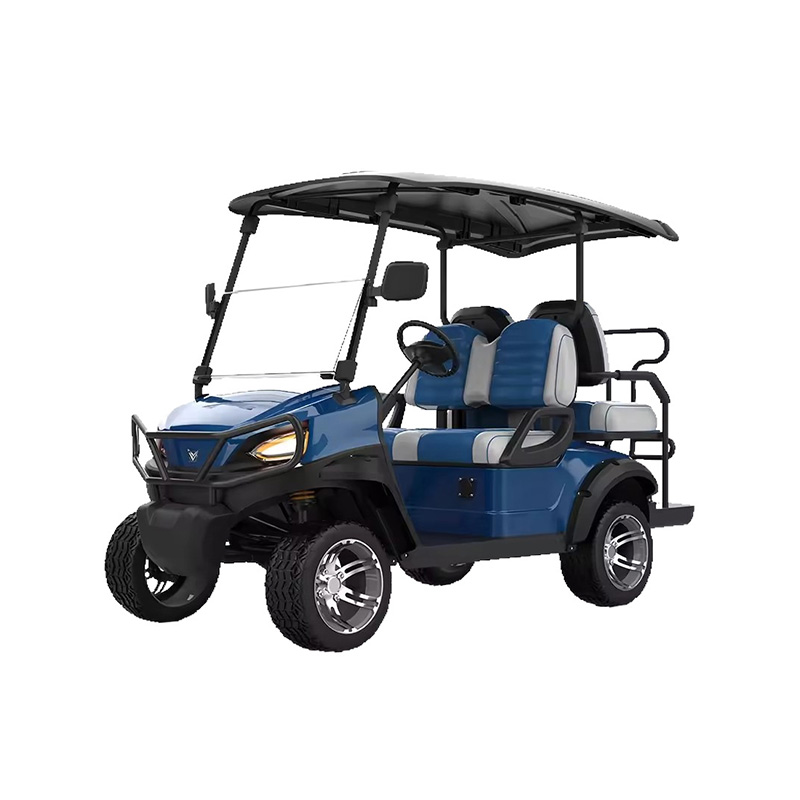
How Does A Golf Cart Electric Differ In Overall Dimensions
The visual difference between the two configurations becomes obvious once they are parked side by side. A Golf Cart Electric generally occupies more space because additional seating requires a larger passenger area.
Extra room is needed not only for sitting, but also for entering and leaving the vehicle comfortably. Rear passengers need space for their legs and enough clearance to sit without feeling restricted. As a result, the body becomes longer and the distance between different sections of the vehicle increases.
A longer structure can influence how the vehicle behaves in everyday surroundings. Open roads, community pathways, and recreational areas often provide enough space for comfortable movement. In tighter locations, such as narrow access lanes or crowded storage areas, a larger vehicle may require more attention during turning and parking.
Storage considerations change as well. Owners who keep the vehicle inside a garage, storage shed, or covered parking area often evaluate available space before selecting a seating configuration.
| Feature | Two Seat Model | 4 Seater Golf Cart Electric |
|---|---|---|
| Passenger Space | Compact | Extended seating area |
| Vehicle Length | Shorter body | Longer body structure |
| Turning Movement | More compact | Requires additional turning room |
| Parking Space | Smaller footprint | Larger footprint |
| Passenger Access | Front seating only | Front and rear seating |
Dimension changes may appear straightforward, yet they influence daily operation more often than many people expect.
What Structural Changes Are Needed To Support Additional Passengers
Adding more seats changes the way a vehicle carries weight. Once another row of passengers is introduced, the supporting structure underneath must adapt accordingly.
A Golf Cart Electric often uses a longer chassis so that passenger weight can be distributed across a larger area. Without that adjustment, the rear portion of the vehicle could carry too much load compared with the front section.
Seat placement also becomes important. Occupants sitting near the rear influence vehicle balance differently from those seated near the front. Designers therefore pay attention to how passenger positions interact with the frame and suspension system.
Support structures beneath the seating area may also be reinforced to handle repeated loading and unloading during everyday use. Such modifications are rarely visible from the outside, although they contribute to how stable the vehicle feels during travel.
Several areas typically change when passenger capacity increases:
- Frame layout
- Seating support structure
- Load distribution across the chassis
- Rear section reinforcement
- Suspension behavior under varying occupancy
A larger passenger capacity involves a series of connected structural adjustments rather than a single design change.
How Does Passenger Capacity Influence Driving Characteristics
Driving feel changes when vehicle weight changes. A lightly occupied cart often responds differently from one carrying several passengers, even when both vehicles share a similar appearance.
A Golf Cart Electric is designed with the expectation that additional occupants may be onboard during regular operation. As passenger numbers increase, the vehicle carries more weight, which naturally influences movement.
Acceleration may feel more gradual because the electric drive system is moving a heavier load. Steering can also feel different since weight is distributed across a larger area of the chassis. During turns, the vehicle responds according to how passengers are positioned and how weight is spread between the front and rear sections.
Braking behavior is influenced as well. Bringing a fully occupied vehicle to a smooth stop requires management of greater momentum compared with a lightly loaded cart.
Ride quality can vary depending on occupancy. A vehicle carrying several people often settles differently over uneven surfaces, while suspension components work continuously to absorb movement generated by the terrain.
The overall driving experience is shaped by a combination of factors rather than a single mechanical feature. Passenger load becomes part of the vehicle's behavior every time it begins moving.
What Differences Exist In Battery Demand And Energy Use
Whenever vehicle weight increases, energy demand changes as well. A larger seating capacity does not automatically mean energy consumption rises dramatically, although additional passengers do influence how the electric system works throughout daily operation.
A 4 Seater Golf Cart Electric often operates under a wider range of loading conditions. Some trips may involve only a driver, while others may include every available seat being occupied. Because of that variation, energy use tends to fluctuate according to actual operating conditions.
Movement from a standstill usually requires more effort when passenger numbers increase. Repeated stopping and starting can therefore affect battery usage differently than continuous travel over longer routes.
Terrain also plays a role. Flat paths create one pattern of energy demand, while slopes and uneven surfaces create another. Passenger load becomes part of that equation, since additional weight changes the amount of work required from the drive system.
Several everyday factors influence battery demand:
- Number of occupants during operation
- Travel distance throughout the day
- Frequency of stopping and starting
- Route conditions
- Average vehicle load over time
Energy consumption is rarely determined by a single factor. Instead, it develops from the interaction between vehicle weight, driving conditions, and daily usage habits.
How Does Cargo And Storage Capacity Change Between Models
Passenger space and storage space often compete for the same area inside a vehicle. Once another row of seats is added, the layout changes, and the available room for carrying other items is no longer arranged in the same way.
In a two-seat cart, the area behind the seats is often used for bags, tools, personal belongings, or equipment needed during daily work. Because fewer passengers are expected, more space can be reserved for carrying objects rather than people.
A 4 Seater Golf Cart Electric follows a different idea. More of the vehicle is dedicated to seating, which naturally changes how cargo is handled. Additional passengers can travel together, although storage areas may become smaller or move to different positions within the vehicle.
The effect becomes clear during everyday use. A maintenance worker moving supplies across a property may pay close attention to storage space. A family traveling between locations may place greater value on carrying everyone in a single trip.
Neither arrangement exists for every situation. The practical difference appears when daily activities begin to shape how the vehicle is used rather than how it looks.
Which Environments Commonly Use A 4 Seater Golf Cart Electric
Some environments create regular demand for group transportation, even when travel distances are relatively short. In such places, carrying several people together often becomes more practical than operating multiple vehicles.
A 4 Seater Golf Cart Electric is commonly seen in residential communities where family members move between shared facilities, gathering areas, and recreational spaces. The same pattern appears in large private properties where transportation is needed throughout the day.
Resort-style environments also create situations where people travel in small groups. Visitors often move between different parts of a property, making additional seating useful without requiring a larger transport vehicle.
Educational facilities, internal transportation routes, and private campuses can create similar conditions. Staff members, guests, and visitors may need transportation between locations, and carrying several occupants at once helps reduce repeated trips.
The vehicle becomes part of daily movement rather than a specialized piece of equipment. Passenger capacity simply reflects how the surrounding environment operates.
When Might A 2 Seater Model Remain A Practical Choice
A larger seating capacity is not automatically necessary. Many transportation tasks involve only one or two people, and in those situations a smaller configuration often fits naturally into daily routines.
Compact dimensions can be useful where pathways are narrow or where storage space is limited. Parking becomes easier in confined areas, and movement through tight corners may require less adjustment from the driver.
A two-seat model also suits situations where equipment is carried more often than passengers. Grounds maintenance, property inspection, and routine transportation work sometimes depend more on available cargo space than on additional seating.
The choice often comes down to routine rather than occasional use. A vehicle that spends nearly every day carrying one passenger may gain little benefit from a larger seating arrangement.
For many operators, simplicity becomes part of the appeal. The vehicle performs a straightforward task and fits comfortably into the environment where it is used.
How Do Maintenance And Operational Requirements Compare
Routine maintenance remains similar regardless of seating capacity. Tires wear over time, batteries require attention, and moving components benefit from regular inspection.
Differences appear gradually through everyday use. A 4 Seater Golf Cart Electric may spend more time carrying heavier loads because additional seats allow more passengers onboard. Over long periods, that operating pattern can influence how suspension components, tires, and braking systems experience wear.
Vehicle usage often matters more than vehicle size. A lightly used four-seat model may experience less wear than a heavily used two-seat vehicle operating throughout the day. For that reason, maintenance schedules are usually influenced by operating conditions rather than seating capacity alone.
Areas commonly checked during routine inspections include:
- Tire condition
- Suspension movement
- Brake response
- Steering components
- Battery condition
- Electrical connections
Long-term reliability is often shaped by consistent care rather than by the number of seats installed on the vehicle.
What Factors Should Be Evaluated Before Choosing Between The Two Models
Selecting between a two-seat vehicle and a 4 Seater Golf Cart Electric often begins with observing how transportation actually happens during a normal week rather than imagining occasional situations.
Passenger numbers usually provide a useful starting point. When several people travel together regularly, additional seating may help simplify movement. When transportation mainly involves one person or a driver with a single passenger, a smaller layout may be sufficient.
The surrounding environment deserves equal attention. Wide paths and open spaces generally accommodate larger vehicles with little difficulty. Narrow routes, compact storage buildings, and restricted parking areas can change that picture considerably.
Future use is another consideration. Transportation needs sometimes change as properties expand or as the number of users increases. Looking beyond immediate requirements can help create a more balanced decision.
| Consideration | Two Seat Model | 4 Seater Golf Cart Electric |
|---|---|---|
| Passenger demand | Lower occupancy needs | Frequent group travel |
| Space requirements | More compact | Larger footprint |
| Storage priority | Greater cargo focus | Greater passenger focus |
| Pathway conditions | Suits tighter areas | Suits open environments |
| Daily transportation pattern | Individual travel | Group movement |
In everyday operation, the difference extends beyond seat count. Vehicle dimensions, cargo space, driving behavior, maintenance patterns, and transportation habits all become part of the decision. A suitable choice usually comes from matching the vehicle to the way it will be used rather than focusing only on capacity.







- Building 1 and 2, No. 2269, Jingzhong Road, Hongjia Street, Taizhou, Zhejiang, China
- +86-18857621312
- [email protected]
