
 English
  русский
  عربى
عربى 
How an Electric Catamaran Boat Achieves Quiet Operation on Water
2026-06-30
The experience of being on the water has long been accompanied by engine noise. The rumble of diesel engines, the vibration through the hull, and the exhaust note all contribute to what people have come to expect from a boat. That expectation is changing. Electric propulsion offers a different way to move across the water, one that changes the experience for everyone on board.
An Electric Catamaran Boat combines two distinct advantages. The catamaran hull form provides stability and efficiency. The electric drive system delivers power without the noise of combustion. Together, they create a vessel that moves through the water with less disturbance than conventional boats.
The pursuit of quiet operation is not just about comfort. Noise affects marine life. It affects the experience of passengers. It changes how the boat interacts with its environment. Reducing noise opens up new possibilities for how and where boats are used.
The Catamaran Hull Advantage
The hull shape of a catamaran contributes to its quiet operation. Two narrow hulls cut through the water rather than pushing a single wide displacement hull. The reduced beam of each hull generates less wave-making resistance, which means less energy is wasted in creating wake.
The wake of a catamaran is smaller than that of a monohull of similar length. The smaller wake translates to less noise. The energy that would have gone into creating waves remains in the propulsion system. The boat moves forward with less disturbance to the water.
The bridge deck connecting the two hulls sits above the waterline. The design keeps the main structure out of the water, reducing the transmission of hull vibration into the living spaces. The separation of the hulls also reduces the area through which noise can travel.
The ride in a catamaran is smoother than in a monohull. The twin hulls provide greater stability and reduce pitching. A boat that moves steadily through the water with less motion produces less structural noise and less disturbance to the water surface. The hull shape sets the foundation for quieter operation.
The Electric Propulsion System
The propulsion system of an Electric Catamaran Boat differs fundamentally from a diesel-powered vessel. Electric motors have fewer moving parts. They do not have pistons, valves, or fuel injectors. The rotating motion of the motor is smoother and more consistent.
The absence of combustion changes the noise profile. There is no exhaust noise, no intake roar, no mechanical clatter from reciprocating components. The motor produces a continuous hum that is lower in frequency and amplitude than diesel engine noise. The difference is noticeable even at close range.
Vibration is also reduced. Electric motors operate with less mechanical imbalance. The forces generated by the motor are lower and more consistent. Less vibration means less noise transmitted through the hull structure into the passenger spaces.
The motor's torque characteristics also contribute to quiet operation. Electric motors deliver full torque from low speeds. The boat accelerates smoothly without the hesitation and noise of a diesel engine changing gears or reaching its power band. The propulsion is direct and immediate.
Energy Storage and Power Delivery
The batteries that power an Electric Catamaran Boat are typically placed low in the hulls. The location contributes to stability and also affects noise. Batteries have no moving parts. They do not generate sound or vibration during normal operation. The energy storage system is silent.
Power electronics convert the DC from the batteries to AC for the motors. These components switch power at high frequencies. The switching occurs at frequencies above the audible range. The motors receive clean, smooth power that reduces harmonics and electrical noise.
Thermal management systems for batteries and electronics operate differently from engine cooling. Instead of circulating seawater through heat exchangers with noisy pumps, electric systems often use quieter fans and liquid cooling loops. The cooling systems are smaller and operate at lower speeds.
| Noise Source | Electric Catamaran | Conventional Diesel Catamaran |
|---|---|---|
| Propulsion | Low-frequency motor hum | Engine rumble and exhaust |
| Mechanical vibration | Minimal | Significant from reciprocating parts |
| Cooling system | Quiet fans, small pumps | Large seawater pumps, fans |
| Fuel system | None | Fuel pumps and injectors |
| Transmission | Direct drive or quiet gearbox | Geared transmission with backlash |
Sound Damping and Acoustic Insulation
The hull of an Electric Catamaran Boat can be designed with acoustic treatment built in. Sound-absorbing materials are placed in the machinery spaces and along the hull where noise might travel. The materials absorb sound energy rather than letting it pass through.
Mounting systems isolate the motors from the hull. Flexible mounts absorb vibration before it can enter the structure. The motors float on these mounts, and the vibration stops at the mount before reaching the hull.
The arrangement of machinery spaces affects noise transmission. Placing the motors and power electronics away from passenger areas reduces the sound reaching the occupants. The layout of the vessel can be planned around noise reduction. With an electric powertrain, that planning pays off more effectively.
Propeller and Drive System Design
The propeller turns motor power into forward motion. The way that happens affects how much noise the boat makes. When a propeller spins too fast or has the wrong blade shape, it creates cavitation. Tiny bubbles form and collapse against the blade surface. The sound is a kind of rattling or buzzing that travels through the water.
An Electric Catamaran Boat can be fitted with a propeller that is designed specifically for quiet running. The blade geometry is chosen to keep pressure changes gradual. The pitch and diameter are matched to the motor's output. The result is a propeller that pushes the boat forward without creating the cavitation noise that plagues faster-spinning setups.
Lower shaft speed helps. A propeller turning at moderate speeds disturbs the water less. The blades slice through more gradually. Electric motors are well suited to this approach because they can deliver the needed thrust without spinning quickly. Diesel engines often need higher RPMs to reach their power band, which forces the propeller to turn faster.
Direct drive removes the gearbox from the system. Gearboxes add noise through the meshing of gears and the load on bearings. Direct drive connects the motor to the shaft with nothing in between. There are fewer parts to vibrate and fewer sources of sound. A Luxury Electric Catamaran often uses this configuration for the sake of both efficiency and quiet.
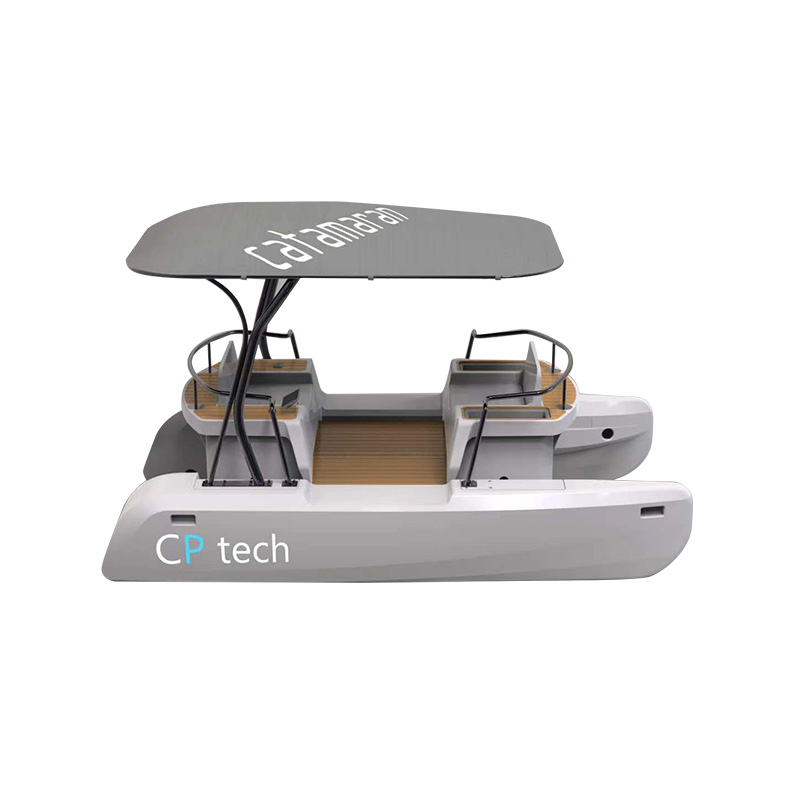
The Luxury Electric Catamaran Experience
Quiet changes how a boat feels. On a Luxury Electric Catamaran, the absence of engine noise becomes something people notice. They can hold a conversation without raising their voices. They hear the water against the hull and the wind across the deck. Those natural sounds come through.
Running at slow speeds in quiet areas becomes possible. A Luxury Electric Catamaran can move through places where a noisy boat would disturb the wildlife. Birds do not flush as readily. Fish are less likely to be startled. The approach is more respectful of the surroundings.
Silence carries a sense of refinement. A boat that moves without making a loud statement is often perceived as better built. The quiet running suggests careful engineering. The design attention extends to other details of the vessel.
The reduced noise also makes longer trips less tiring. The constant drone of engines wears on passengers. Without that, people arrive feeling more rested. The ride feels easier on the body and the mind.
Operational Benefits of Quiet Performance
Quiet performance serves more than comfort. Communication aboard the boat improves. The crew can talk to guests without raising their voices. The absence of engine roar also means lighter construction is feasible in some areas.
Maneuvering becomes more deliberate. A quiet boat can approach a dock without announcing its arrival from a distance. The approach is controlled and unhurried. The lack of engine noise makes the operation feel more precise.
The absence of exhaust is another practical advantage. Diesel boats produce fumes that affect air quality on board and around the vessel. The Electric Catamaran Boat puts out zero emissions at the point of use. The air stays clean.
The torque characteristics of the electric motor allow the boat to cruise at low speeds with high efficiency. That capability translates to longer range on a charge. The quiet cruise becomes an economical one as well.
Comparing Electric and Conventional Catamarans
The acoustic difference between the two types is immediate. A diesel catamaran produces a low rumble that carries across the water. The sound can be heard well beyond the vessel. An Electric Catamaran Boat does not produce that kind of noise.
The absence of exhaust noise is one of the clearer distinctions. The familiar diesel clatter is simply not there. The onboard atmosphere changes.
Vibration is another area of difference. Diesel engines shake. The vibration travels through the hull and into the seating. Electric motors produce less vibration, and the mounts further reduce what reaches the passenger areas.
Looking Ahead: The Future of Quiet Marine Propulsion
The technology continues to evolve. Battery systems with higher energy density allow longer trips. Motor designs become more efficient and quieter as the engineering improves.
The push for quiet operation aligns with broader environmental concerns. Noise pollution affects marine life. Vessels that move without loud engines support conservation efforts.
The desire for silence on the water is likely to grow. As more people experience the difference, they come to expect it. The Electric Catamaran Boat represents a change in what people want from a vessel.






- Building 1 and 2, No. 2269, Jingzhong Road, Hongjia Street, Taizhou, Zhejiang, China
- +86-18857621312
- [email protected]
