
 English
  русский
  عربى
عربى 
Why Is Off Road Farm UTV Suitable For Rough Terrain Work And Rural Transport
2026-06-02
Rural transport is rarely a straight path from one point to another. Work often moves across open fields, narrow trails, storage corners, and uneven ground that changes character depending on weather and usage. A simple trip can turn into repeated stopping, turning, loading, and adjusting, which makes mobility part of the work itself rather than a separate function.
In such conditions, walking or manual carrying becomes tiring once distance or weight increases. Larger road-oriented vehicles also face limitations when the surface turns soft, narrow, or unpaved. Movement slows down, and access becomes restricted by terrain rather than by task.
Off Road Farm UTV is often used in this gap between heavy machinery and manual transport. It moves through irregular paths while still handling practical loads found in farming and rural work. Electric Farm ATV also appears in lighter movement tasks, especially in places where short travel distance and quieter operation matter more than carrying capacity.
What makes these vehicles relevant is not a single feature, but how they respond to repeated daily use, changing ground conditions, and the constant need for flexible movement across different working zones.
Why Compact Structure Matters in Off-Road Farm Work
Space in rural environments rarely stays consistent. A wide open field can narrow suddenly into crop rows or fenced passages, and storage areas often require movement through tight corners where turning space is limited. These changes happen naturally with layout and season, so transport tools need to adjust rather than interrupt the workflow.
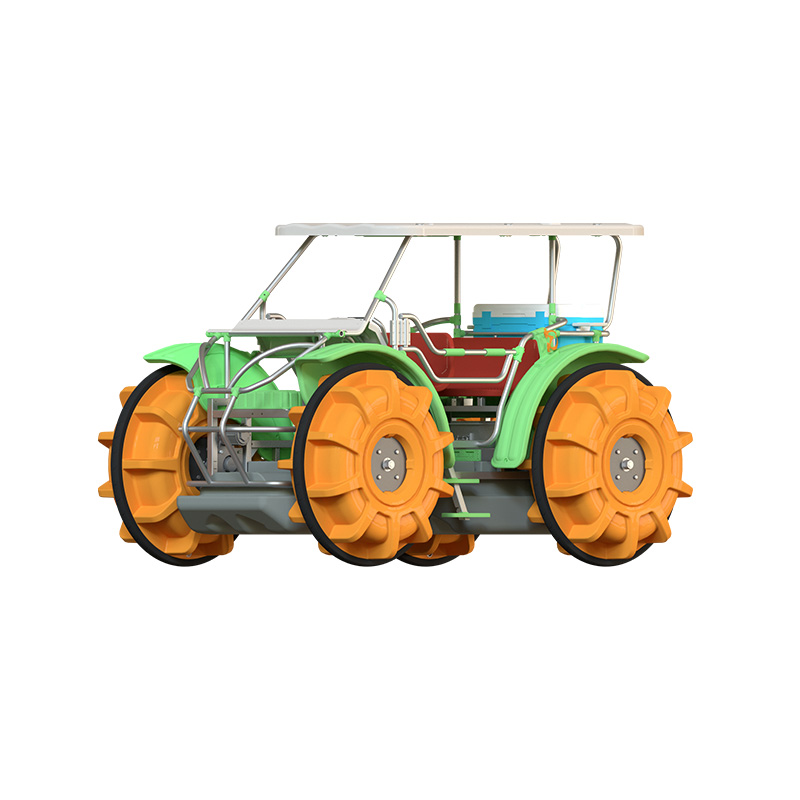
Off Road Farm UTV is commonly shaped around compact structure so it can move through these mixed spaces without requiring large turning radius or wide access paths. Instead of reshaping the environment, it adapts to it, which becomes useful in areas where ground and space conditions cannot easily be modified.
Soil protection also plays a quiet but important role. In agricultural settings, repeated pressure from heavier machines can leave deep marks or compact the ground, which may affect later planting or surface condition. A smaller footprint reduces that impact while still allowing movement of materials.
Typical movement patterns include traveling between crop lines, entering storage sheds, passing through narrow field edges, and handling short-distance transport where direction changes happen frequently. In these situations, compact structure supports continuous work without unnecessary interruption.
How Heavy-Duty Capability Supports Rural Transport Tasks
Rural work involves more than one type of material flow. Feed, tools, harvested crops, water containers, and equipment parts often need to move across different points during the same working cycle. These tasks repeat, and transport becomes part of the routine rather than a one-time action.
Off Road Farm UTV is often used because it combines carrying and towing functions within a single system. This reduces the need to switch between different transport tools and helps keep movement consistent across changing tasks.
Load behavior becomes especially important on uneven ground. When the surface is not stable, materials inside the cargo area may shift slightly, and a stable structure helps reduce unnecessary movement during travel. This creates a more controlled transport experience even when conditions are not uniform.
Common rural transport activities include carrying mixed supplies across fields, towing trailers or equipment, moving water or feed, and supporting repeated short trips throughout the day. Each task places different demands on stability and handling.
The table below reflects how transport needs often vary in practical rural work:
| Rural Task Type | Transport Behavior | Practical Focus |
|---|---|---|
| Supply movement | Repeated loading cycles | Stability on uneven ground |
| Tool transport | Short frequent trips | Easy access and unloading |
| Equipment towing | Pulling demand | Grip on soft or sloped surfaces |
| Water handling | Weight balance control | Reduced shifting during motion |
What becomes noticeable in real use is that efficiency is not only about carrying capacity, but about how consistently the vehicle performs under repetition. Rural work rarely involves a single trip; it is a continuous cycle of movement, loading, and return.
What Makes Off-Road Engineering Suitable For Rough Terrain
Rough terrain is not a fixed condition. It changes with weather, soil structure, and seasonal activity. A dry surface may become loose and uneven, while rainfall can turn paths into muddy or unstable routes. In some areas, rocks, dips, and natural obstacles appear without clear patterns.
Off Road Farm UTV is generally built to respond to these variations through mechanical balance rather than fixed-road assumptions. Traction distribution across wheels helps maintain movement even when parts of the surface lose grip, allowing travel to continue across inconsistent ground.
Ground clearance becomes relevant when the terrain includes uneven bumps, ruts, or natural obstacles. Increased clearance allows movement without frequent contact interruptions, reducing the need to stop or adjust direction constantly during travel.
Suspension behavior also plays a role in reducing the impact of uneven surfaces. When ground height changes suddenly, controlled suspension movement helps absorb part of the force, allowing smoother operation across rough paths.
In real working environments, rough terrain capability is usually reflected through behavior such as:
- Continuous movement across soft or unstable soil
- Passage over uneven or broken surfaces without frequent stops
- Maintained traction during slope changes
- Adaptation to shifting ground conditions during travel
Electric Farm ATV is often used in lighter tasks within the same environment. It supports short-distance movement where load demand is lower, working alongside utility vehicles that handle heavier transport needs.
Different vehicle types often function together within rural systems, each covering a specific level of movement demand depending on terrain and workload intensity.
Why Maneuverability Matters in Rural Working Environments
Movement in rural areas often happens in spaces that were not designed with transport in mind. Paths between crops can be narrow, storage areas may have limited turning room, and forest edges or hillside tracks often shift direction without warning. In these conditions, the ability to adjust direction smoothly becomes just as important as carrying power.
Off Road Farm UTV is generally designed with this kind of working reality in mind, where turning space is not always guaranteed and movement needs to continue without repeated repositioning. A compact body combined with responsive steering behavior allows it to pass through tight areas where larger vehicles would need to stop, reverse, and re-enter multiple times.
What matters in daily use is not only whether a vehicle can enter a space, but whether it can complete movement inside that space without disrupting surrounding ground conditions. In agricultural areas, repeated turning from heavier machines can damage soil structure or flatten crop edges, which affects later use of the land. A more controlled turning radius helps reduce that impact.
Maneuverability becomes especially noticeable in situations such as moving between barns and fields, navigating storage zones with limited clearance, or transporting supplies along winding rural paths where direction changes happen frequently and without much warning.
Electric Farm ATV is sometimes used in similar environments for lighter movement tasks. Its smaller load focus makes it suitable for quick transfers in compact areas, especially where frequent stops and short routes are part of the working pattern.
How Safety and Comfort Support Long Working Hours
Rural transport is not limited to short trips. Work often continues across extended periods, where operators move repeatedly between different locations while carrying varying loads. In such conditions, physical strain gradually builds up, especially when terrain remains uneven or paths require constant adjustment.
Safety in Off Road Farm UTV is closely connected to structure and operator positioning. A seated driving layout with clear directional control reduces the need for physical balancing during movement, especially when surfaces are unstable. Protective framing around the operator area adds another layer of structural stability during uneven travel.
Comfort becomes noticeable during long working cycles rather than short trips. Repeated vibration from rough terrain can affect focus and physical fatigue over time. A more stable seating arrangement helps reduce continuous body adjustment, allowing attention to remain on movement rather than on maintaining balance.
Several practical elements contribute to safety and comfort during rural operation:
- Seated driving position that supports stable control
- Protective frame structure around operator space
- Seatbelt use for controlled movement on uneven ground
- Steering-based handling that reduces physical strain
- Layout designed for visibility across field and path conditions
In real environments, these features are not experienced individually. They work together during repeated tasks such as transporting supplies across fields, moving between storage areas, or navigating uneven farm routes where stability becomes part of daily safety awareness.
Electric Farm ATV is often used in lighter-duty environments where shorter travel distance and reduced load requirements allow simpler operation patterns. In such cases, comfort is still relevant, although the workload intensity tends to differ from heavier utility transport.
How Terrain Variation Shapes Practical Vehicle Use
Rural terrain rarely remains constant across time. A path that feels stable in dry conditions may become uneven after rainfall, and soft soil can gradually shift under repeated movement. Seasonal changes also affect surface firmness, creating different levels of resistance depending on when and how often the area is used.
Off Road Farm UTV is commonly used in environments where these variations are part of daily work rather than exceptions. Its ability to maintain movement across changing surfaces comes from a combination of traction behavior, structural balance, and ground adaptation rather than reliance on a single terrain condition.
Different terrain types create different movement challenges. Mud requires controlled traction to avoid slipping. Rocky ground demands resistance against sudden impact. Sloped areas require balance during ascent and descent. Each condition influences how transport systems behave in practice.
Typical terrain responses include:
- Adjusting traction during soft or loose soil movement
- Maintaining stability when crossing uneven rock surfaces
- Supporting controlled descent on sloped ground
- Continuing movement through mixed terrain without frequent stops
Electric Farm ATV is often used in lighter terrain tasks where surface conditions are less demanding or where travel distance remains short. Its role fits into a broader system where different mobility tools operate side by side depending on workload intensity.
How Off Road Farm UTV Supports Combined Work Efficiency
Rural work rarely follows a single task pattern. Movement, loading, unloading, and repositioning often occur repeatedly within the same working cycle. Over time, transport becomes part of the workflow rhythm rather than a separate activity.
Off Road Farm UTV supports this pattern by combining multiple functions within one platform. Carrying, towing, and general transport can be handled without changing equipment, which helps maintain continuity during active work periods.
Efficiency in rural environments is often measured by how smoothly tasks connect with each other. A vehicle that can move between different functions without interruption allows more consistent workflow, especially when time is divided across multiple field locations.
Key practical aspects include:
- Combined load and towing capability within one system
- Continuous movement between different work zones
- Reduced need for repeated equipment switching
- Adaptation to both field transport and storage movement
- Support for repeated daily operational cycles
Electric Farm ATV complements this system by handling lighter tasks where full utility capacity is not required. Together, they form a flexible approach to rural mobility where different transport tools support different layers of work demand.
Evolving Direction of Rural Utility Mobility
Rural transport systems continue to shift toward more adaptable and task-oriented designs. Work environments are no longer defined by a single type of movement, and vehicles are expected to respond to changing ground conditions, workload variation, and mixed-use patterns within the same space.
Off Road Farm UTV remains closely aligned with these needs through its balance of compact structure, load capability, and terrain adaptability. At the same time, Electric Farm ATV introduces a lighter movement option that fits within quieter and shorter-distance tasks.
Rather than replacing each other, these vehicle types tend to operate in parallel, supporting different parts of rural activity depending on terrain intensity and transport requirements. This layered approach reflects how rural work itself continues to diversify, where flexibility becomes as important as raw capacity.
In practical use, the direction of development is closely tied to everyday behavior in fields, farms, and rural work zones, where movement is continuous, surfaces are unpredictable, and transport needs shift throughout the day.








- Building 1 and 2, No. 2269, Jingzhong Road, Hongjia Street, Taizhou, Zhejiang, China
- +86-18857621312
- [email protected]
