
 English
  русский
  عربى
عربى 
Why Do Amphibious ATV Vehicle Designs Matter For Mixed Land And Water Use
2026-06-16
Many outdoor routes do not stay on one type of ground. A vehicle may travel across a dry track, move through soft soil, pass a drainage area, and reach a section covered by shallow water. Conditions can change within a short distance.
For people working in remote areas, changing terrain often creates transportation challenges. Walking through wet ground can be slow. Larger vehicles may struggle in muddy locations. Boats solve one problem while creating another once solid ground appears again.
An Amphibious ATV Vehicle is designed around that reality. Instead of focusing on only one environment, the vehicle must function across several conditions during the same journey.
Interest in multi-terrain machines has grown in places where water and land exist side by side. Wet fields, marsh areas, irrigation zones, flood-prone locations, and remote properties often require movement beyond ordinary roads.
The challenge is not simply reaching a destination. The challenge is maintaining mobility when terrain changes unexpectedly.
How Mixed Terrain Conditions Influence Vehicle Design Requirements
A vehicle moving across hard ground faces very different forces from a vehicle floating on water. On land, traction comes from tire contact with the surface. In water, movement depends on flotation and resistance around the vehicle body.
Combining both requirements creates a difficult design task.
A machine built only for off-road trails may have strong traction and high ground clearance. Once water becomes part of the route, many of those advantages lose importance. A floating vehicle must remain balanced and controllable even when tire grip disappears.
Engineers therefore focus on several practical questions:
- How can the vehicle remain stable while floating?
- How can it keep moving through soft terrain?
- How can components stay protected from water exposure?
- How can transitions between environments feel predictable?
Real-world conditions rarely remain constant. A route that is dry one season may become saturated later. Ground conditions can also change after rainfall or irrigation.
Vehicle design must account for those variations rather than a single operating surface.
Buoyancy And Weight Distribution As Core Engineering Factors
When people think about amphibious vehicles, attention often goes to movement on water. Before movement becomes possible, flotation must be achieved.
Buoyancy begins with structure and weight placement.
An Amphibious ATV Vehicle depends on balanced distribution throughout the body. The location of mechanical components, cargo space, seating position, and storage areas all affect how the vehicle sits in water.
A poorly balanced layout can create noticeable problems. One end may sit lower than the other. Turning becomes less predictable. Additional resistance appears during movement.
Field operators often carry equipment, tools, supplies, or harvested materials. Load position changes throughout the day. A stable design helps reduce the influence of shifting cargo.
Important considerations include:
- Position of major mechanical systems
- Arrangement of storage areas
- Location of operator seating
- Balance between front and rear sections
- Shape of flotation-supporting structures
Good flotation is not only about staying above water. Stability during movement is equally important.
Tire Design And Traction Performance Across Changing Surfaces
Tires are among the few vehicle components that interact directly with nearly every surface encountered during operation.
Dry soil, wet grass, loose gravel, mud, and shallow water each place different demands on tread design.
Deep tread patterns often help in muddy environments because they clear debris more effectively. Water travel introduces another consideration. Tire shape influences how the vehicle moves while floating and how efficiently it leaves the shoreline.
No single tread pattern is ideal for every condition. Design teams generally seek a balance between different requirements.
Practical factors include:
- Ability to maintain traction on soft ground
- Resistance to mud buildup
- Stability on uneven surfaces
- Performance during shoreline entry and exit
- Behavior in shallow water environments
In agricultural regions, vehicles may move between field roads, drainage channels, and wet working areas within a single trip. Tire design plays a major role in maintaining consistent mobility.
Chassis Structure And Ground Clearance Adaptation
Ground conditions are often less predictable than they appear from a distance. A smooth surface may hide roots, stones, ruts, or submerged obstacles.
The lower structure of an Amphibious ATV Vehicle therefore receives considerable attention during development.
Ground clearance affects how easily the vehicle passes over uneven terrain. Clearance alone is not enough. The shape of the underside matters as well. A smooth lower structure is less likely to catch on obstacles.
Practical design concerns often include:
- Protection for exposed components
- Strength in areas likely to contact obstacles
- Stable support for carried loads
- Reduced risk of becoming stuck on uneven ground
- Adaptability to changing terrain conditions
Remote work environments rarely provide maintained travel routes. Vehicles operating in such locations must cope with whatever conditions exist on a given day.
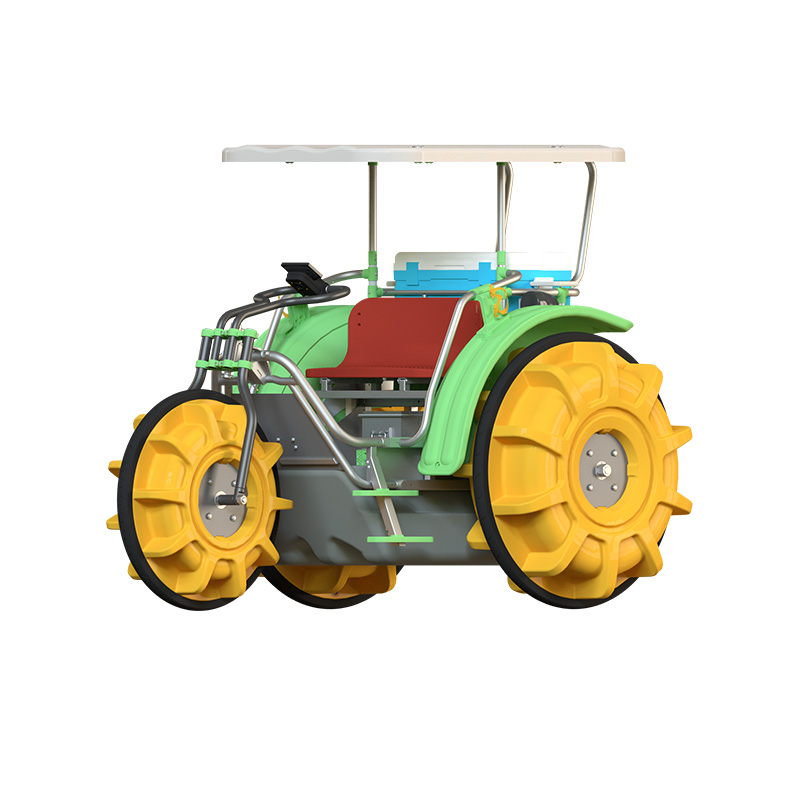
Waterproofing And Component Protection In Amphibious ATV Vehicle Systems
Water affects equipment in ways that are not always visible immediately. Moisture may enter small openings, collect around moving parts, or remain trapped after operation ends.
For an Amphibious ATV Vehicle, protection extends far beyond the outer body.
Electrical systems, drive components, bearings, control mechanisms, and service access points all require attention during design and maintenance planning.
Areas commonly protected include:
- Electrical connections exposed to moisture
- Mechanical components operating near water
- Moving joints and rotating assemblies
- Access covers and inspection points
- Internal compartments containing sensitive equipment
Repeated exposure often creates more challenges than occasional contact. Mud, organic material, and standing water can remain on the vehicle after use, increasing the importance of protective design.
Durability in mixed environments depends largely on how well critical systems remain isolated from unwanted moisture.
Steering Characteristics On Land And Water
Steering behavior changes noticeably when moving from solid ground to water.
On land, direction changes happen through tire contact with the surface. Drivers receive immediate feedback from soil, gravel, grass, or mud. Water removes much of that direct interaction.
Once floating begins, movement becomes smoother and often slower to respond. Directional control depends on different forces than those found on land. Shoreline areas can be especially demanding because the vehicle experiences both environments at the same time.
Design teams often focus on:
- Consistent steering feel across changing terrain
- Stability during low-speed movement
- Control while entering or leaving water
- Predictable directional response
For operators, confidence often comes from familiarity. A vehicle that reacts in a steady and understandable way allows attention to remain on surroundings rather than constant steering corrections.
Power Delivery And Mobility Efficiency Across Multiple Environments
Moving across land and moving across water place different demands on a vehicle. Dry ground often requires steady traction and enough force to climb uneven surfaces. Water introduces resistance from an entirely different direction. The vehicle must push against the surrounding environment while maintaining balance.
An Amphibious ATV Vehicle therefore relies on a power system capable of adapting to changing conditions without requiring major adjustments from the operator.
On rough ground, power delivery helps maintain movement through soft soil, mud, and vegetation. In water, smooth transfer of force becomes important because sudden changes can affect stability.
Several factors influence mobility efficiency:
- Distribution of driving force across the vehicle
- Response during low-speed maneuvering
- Adaptability to changing surface resistance
- Control when moving between land and water
- Consistency under varying load conditions
In practical use, operators often encounter mixed routes where terrain changes repeatedly. A vehicle that responds predictably across those conditions reduces interruptions and allows work to continue more smoothly.
The Growing Role Of Electric Farm ATV Platforms In Rural Applications
Agricultural work often takes place far from paved roads. Fields, irrigation channels, soft ground, and seasonal wet areas create transportation challenges throughout the year.
The development of the Electric Farm ATV reflects changing needs within rural environments. Quiet operation, simplified mechanical layouts, and adaptability to varied terrain have attracted attention in agricultural settings.
Although an Electric Farm ATV and an amphibious vehicle are not identical products, they share several design considerations.
Both types of vehicles often operate in locations where ground conditions change frequently. Both require dependable mobility away from established road networks. Both benefit from designs that support stability and practical utility.
Common working environments include:
- Irrigated farmland
- Wet pasture areas
- Orchard access routes
- Remote property maintenance zones
- Areas affected by seasonal water accumulation
As rural operations continue to evolve, designers increasingly examine how mobility solutions can function across a wider range of environmental conditions.
Safety Considerations During Land To Water Transitions
Many operational challenges occur not in open water or on dry land, but at the point where one environment meets the other.
Shorelines, muddy banks, drainage channels, and flooded edges often create uneven surfaces. Vehicle balance may change as part of the structure remains supported by the ground while another section begins to float.
Operator awareness becomes especially important in such situations.
Factors affecting safe movement include:
- Surface firmness near entry points
- Visibility of submerged obstacles
- Changes in vehicle balance
- Water depth variations
- Condition of surrounding terrain
Natural environments rarely offer uniform conditions. A location that appears stable from a distance may contain soft ground or hidden depressions.
Design improvements can help support safer operation, though careful route assessment remains an important part of practical use.
Maintenance Demands Created By Dual Environment Operation
Vehicles operating across land and water face maintenance conditions different from those found in ordinary off-road use.
Mud, moisture, vegetation, and fine debris often accumulate in areas that are difficult to inspect during daily operation. Regular cleaning helps reduce long-term wear and allows early identification of potential issues.
Attention is commonly directed toward:
- Seals and protective barriers
- Moving joints and suspension points
- Electrical connections
- Drive components
- Areas where debris tends to collect
After operating in wet environments, moisture may remain trapped inside small spaces. Cleaning and drying procedures help reduce unnecessary exposure to those conditions.
Maintenance is not limited to correcting visible problems. Preventive inspection often plays a larger role in supporting long-term reliability.
Environmental Interaction And Terrain Preservation
Vehicle design influences more than mobility. It also affects how a machine interacts with the surrounding landscape.
In wetlands, flood-prone areas, and natural environments, repeated vehicle movement can change surface conditions over time. Designers therefore consider ways to reduce unnecessary ground disturbance while maintaining practical capability.
An Amphibious ATV Vehicle may allow access to areas where temporary crossings or additional infrastructure would otherwise be required.
Environmental considerations often include:
- Ground pressure distribution
- Surface disturbance during travel
- Movement through sensitive terrain
- Impact on vegetation
- Adaptability to existing natural pathways
The relationship between mobility and environmental responsibility continues to receive attention across many outdoor industries.
Future Development Directions For Multi Terrain Utility Vehicles
Vehicle development continues to follow changing operational requirements. Users increasingly expect equipment to handle varied environments without sacrificing practicality.
Several areas are receiving ongoing attention:
- Improved energy efficiency
- Enhanced component protection
- Better adaptability across changing terrain
- Simplified maintenance access
- Integration of electric drive technologies
The growth of the Electric Farm ATV segment has also encouraged discussion about how electric propulsion may influence future multi-terrain vehicle designs.
Advances in materials, sealing methods, and power systems are gradually expanding the range of environments where utility vehicles can operate effectively.
Development trends often focus less on a single operating condition and more on flexibility across multiple scenarios.
Why Mixed Terrain Capability Remains Relevant
Movement across complex environments has always required compromise. A vehicle suited to one terrain may face limitations in another. The purpose behind an Amphibious ATV Vehicle is to reduce those limitations by combining flotation, traction, protection, and control within one platform.
Practical value becomes apparent in locations where land and water exist side by side. Wet agricultural areas, remote properties, conservation zones, and outdoor work sites often present conditions that change from one section to the next.
The continued interest in such vehicles reflects a simple reality: many real-world routes do not follow a single terrain type. Successful designs respond to that reality through careful attention to balance, mobility, durability, and adaptability.






- Building 1 and 2, No. 2269, Jingzhong Road, Hongjia Street, Taizhou, Zhejiang, China
- +86-18857621312
- [email protected]
