
 English
 русский
 عربى

How to Choose Attachments for an Off Road Farm UTV
2026-10-20
Farm work rarely follows one routine. The morning may go to hauling feed between sheds. The afternoon may bring a broken fence wire or a fallen branch across a field path. A utility vehicle helps with all of it, but only when its attachments match the jobs it does week after week.
An Off Road Farm UTV works well when it carries what the work calls for. A cargo bed moves supplies. A winch assists with certain pulling and recovery jobs. A tool rack keeps hand tools in reach. Piling on every accessory adds weight and clutter, so begin with a list of what actually happens on your land.
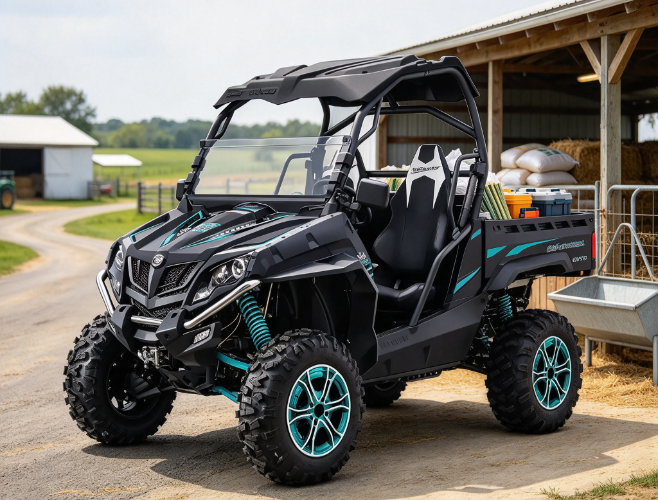
Match Attachments to Weekly Work
Write down a normal week. Note what gets carried, where the vehicle gets stuck, and which tools are needed away from the barn. That list usually shows which attachment earns its place.
| Farm Task | Attachment to Consider | Purpose |
|---|---|---|
| Moving feed and supplies | Cargo bed | Carry materials between work areas |
| Fence repairs | Tool rack and cargo bed | Organize tools, haul posts and wire |
| Clearing branches | Cargo bed | Move collected debris |
| Freeing a stuck vehicle | Winch, where suitable | Assist controlled recovery |
| Field inspections | Tool rack | Keep inspection tools within reach |
| General upkeep | Combined setup | Cover several routine jobs |
A livestock farm may lean on the cargo bed for feed and cleaning supplies. A crop farm or orchard may care more about racks for long-handled pruning tools. Woodland paths raise the question of recovery gear.
Cargo Beds
Think about what rides in the bed. Feed bags, loose branches, and a bucket of fasteners behave differently. Small items slide around and mix together, so a bed that suits boxed goods may need dividers or bins for loose parts.
Look at the shape of the bed, how the sides and tailgate open, and whether tie-down points exist. Easy loading and unloading saves backs. Side walls keep loose material in, and a tailgate that opens fully helps when dumping debris. A surface that rinses clean matters when the bed carries soil, plant residue, or livestock supplies.
An extra-large bed does not raise the vehicle's safe carrying limit. Follow the vehicle and attachment instructions, spread the load evenly, and keep cargo from blocking the driver's view or interfering with control.
Winches
A winch fits selected pulling and recovery jobs, such as freeing a UTV stuck on a farm track. It is not an answer to every problem. Suitability depends on the vehicle, mounting, load, anchor point, terrain, and procedure.
Planning routes matters more than owning recovery gear. Wet soil, loose gravel, deep ruts, and slopes change quickly after rain. Avoiding a bad crossing is safer than working a vehicle free afterward.
Check these points before buying:
| Check | Why It Matters |
|---|---|
| Vehicle compatibility | The winch must suit the UTV |
| Mounting arrangement | Supports secure attachment |
| Intended task | Defines the kind of pulling work |
| Recovery point | Must be suitable for the planned load |
| Operating instructions | Describe approved setup and use |
| Equipment inspection | Reveals wear or visible damage |
Only trained people should run a winch. Keep everyone out of the line of pull, and never position anyone where a tensioned line or moving load could reach them. Halt the recovery if conditions fall outside what the equipment is designed for.
Tool Racks
Farm jobs call for many small tools. Without a rack, wrenches, pliers, and fasteners end up rattling around in the bed, and workers waste time digging for them. A rack gives selected tools a fixed place and keeps the bed clear for bulk loads.
Match the rack to the tools. Long-handled items need a different layout from compact hand tools. Put frequently used tools where they can be lifted out without reaching past passengers or controls. Sharp edges and heavy items need secure placement so they do not shift in transit.
Weather matters too. Some tools suffer from rain and dirt and may need an enclosed box instead of an open rack. Check that the rack does not block visibility, passenger space, or service points, and that it fits with the cargo bed or winch when all are installed.
One Attachment or Several?
It depends on how often jobs repeat. A cargo bed alone covers routine hauling. A rack and bed together suit fence maintenance, with tools organized on one side and posts in the other. A winch matters mainly where terrain makes recovery a real possibility.
| Setup | Work Pattern | Planning Point |
|---|---|---|
| Cargo bed only | Routine material movement | Secure loads, stay within limits |
| Tool rack and cargo bed | Maintenance and repair | Keep tools apart from bulk materials |
| Winch and cargo bed | Transport plus occasional recovery | Check compatibility and safe use |
| Combined attachments | Varied farm work | Review weight, clearance, and access |
More equipment adds weight and changes handling. A setup that works for one job can feel awkward under another load. Decide whether each attachment stays mounted or comes off between tasks.
Terrain and Farm Type
Livestock farms deal with mud, moisture, and feed residue, so choose beds and racks that clean easily. Keep attachments from creating sharp edges or loose parts near gates, feeding areas, and narrow lanes. Never use a winch to move animals.
Crop farms and orchards often have tight rows, low branches, and irrigation lines. Measure path width, turning room, and overhead clearance before ordering a bed or rack. A rack also keeps pruning tools apart from harvested material.
A loaded bed changes how a UTV handles slopes and turns. Heavy tools mounted high or far from the center can affect balance. Walk your routes in the conditions you work in, and follow the vehicle's operating guidance.
Organization, Maintenance, and Buying Questions
Give every removable attachment a storage spot. Before travel, workers should check that attachments are secure and report visible damage. A shared note on the vehicle helps when several people use it and nobody knows what happened last shift.
Maintenance differs between a bed, winch, and rack. Electrical parts and moving components need particular attention, and mounting points should be checked for wear or looseness as the manufacturer directs.
Before purchase, ask:
- Which tasks will this attachment support?
- Does it fit the specific UTV model and mounts?
- How does it change cargo space, weight, and handling?
- Can workers load, unload, and secure items safely?
- What inspection and upkeep does it need?
- Will it stay on or come off between jobs?
- Are clear operating instructions included?
Seasons shift the setup. Planting and crop care may need tools and small supplies. Property cleanup may need the bed for branches and repair materials. Review the arrangement before each busy period and remove what the coming work does not need. An Off Road Farm UTV serves best when each attachment has a clear job, fits the vehicle, and suits the ground it crosses.








- Building 1 and 2, No. 2269, Jingzhong Road, Hongjia Street, Taizhou, Zhejiang, China
- +86-18857621312
- [email protected]
